



12 Keys to Divine Support
During times of hardship, many Muslims ask important questions that unlock great opportunities to do good, to change, and to improve the state of the individual and the global community. One of these insightful questions is, “What are the keys mentioned by Allah that are associated with His Divine support?” And while there are many responses to this question, the following twelve keys serve as an introduction. 1. Strong eman in Allah We respond to the trials and concerns of life with our worldview, our beliefs about God, and the strength of our eman (belief/faith). Thus, during one of the historical battles, Allah says about the believers’ reaction to a worrisome matter: “When the believers saw the enemy alliance, they said, ‘This is what Allah and His Messenger had promised us. The promise of Allah and His Messenger has come true.’ And this only increased them in faith and submission” (Qur’an 33:22). Faith and belief in Allah are associated with trials and success. A person of weak eman, for example, might give up early on during a difficulty rather than enduring. 2. Tawheed: establishing the Oneness of Allah The early revelations were mostly about the Oneness of God, especially significant because of the prevalent idol-worship of Arabia. Belief in the oneness of God, or tawheed, is associated with success and expansiveness of the ummah. Allah says: “Allah has promised those of you who believe and do good that He will certainly make them successors in the land, as He did with those before them; and will surely establish for them their faith which He has chosen for them; and will indeed change their fear into security. They worship Me, associating nothing with Me. But whoever disbelieves after this, it is they who will be the rebellious (Qur’an 24:55). 3. Tawakkul: trusting fully in Allah One of the greatest traits of believers is their trust in God. “And whoever puts their trust in Allah, then He is sufficient for them” (Qur’an 65:3). Allah is sufficient to dispose of one’s affairs as He is greater than one’s worries, anxieties, problems, and enemies. Allah suffices as a protector. Tawakkul, however, is an internal state of worship that is combined externally with taking all measures, such as a student trusting in Allah and also doing their best to study for an exam. An ummah that has trust in Allah does not waver in that trust, no matter how long the trial is prolonged. The early Muslims were referenced likewise in the Qur’an: “Those who were warned, ‘Your enemies have mobilized their forces against you, so fear them,’ the warning only made them grow stronger in faith and they replied, ‘Allah is sufficient as an aid for us and is the best Protector” (Qur’an 3:173). 4. Sabr: perseverance and endurance, especially in times of difficulty Allah SWT says, “Do you think you will enter Paradise without Allah proving which of you strive and patiently endure?” (Qur’an 3:142). And in another verse, we are told, “O believers! Patiently endure, persevere, be steadfast, and be mindful of Allah, so you may be successful” (Qur’an 3:200). Ibn Abbas reported: The Messenger of Allah (s) said, “Know that there is much good in being patient with what you detest; victory will come with patience, relief will come with affliction, and ‘with the hardship will come ease’ [94:5]’” (Musnad Aḥmad). 5. Taqwa: God-consciousness Taqwa is to have a sense of cautiousness out of love for Allah, fear of breaking His laws and thus staying away from acts that lead to sinfulness. Allah says, “And whoever is mindful [has taqwa] of Allah, He will make a way out for them, and provide for them from sources they could never imagine” (Qur’an 65:2-3). 6. Supporting the religion of Allah One of the greatest signs of real submission to Allah is that one seeks divine support by obeying Allah’s commands and staying away from His prohibitions. Allah gives a clear promise in the Qur’an: “Believers, if you aid Allah, He will come to your aid and will plant your feet firmly” (Qur’an 47:7). This may apply at times to situations where the companions were defending their lives in the battlefield, but this is a general promise for believers until the end of times. If we support Islam, practice it in private and public, in rituals and good character, Allah promises divine support and firmness. 7. Istiqaamah: steadfastness Being steadfast is an integral part of Islam. The first step is submission, the second is steadfastness upon submission. It is linked to success and true worship, and it is a reminder given to the Prophet (s) and the Muslims — “So be steadfast as you are commanded, along with those who turn [to Allah] with you. And do not transgress. Surely, He is All-Seeing of what you do” (Qur’an 11:112). And in another verse: “Surely those who say, ‘Our Lord is Allah’ and then remain steadfast—there will be no fear for them, nor will they grieve” (Qur’an 46:13). 8. Unity for the sake of Allah In a time of great division, there is an absolute need to unite as believers, to work together, to learn how to prioritize unity over ideological differences, group rivalries, personal agendas, or any other consideration. “Obey Allah and His Messenger and do not dispute with one another, or you would be discouraged and weakened. Persevere! Surely Allah is with those who persevere” (Qur’an 8:46). 9. Du’a and full conviction in His response An essential act of worship is du’a (to call upon Allah), and it is linked to other acts of worship for the believers. It’s an act that represents a powerful relationship between Master and servant, Creator and creation. And it is the weapon and fortress of the believer. Allah says to those who doubt their du’a is heard, “Call upon Me, I will respond to you” (Qur’an 40:60). Du’a, though, is not answered only on our terms, according to our timeline, or in the manner we think
Palestine: The Beating Heart of the Ummah

Every time I stroll down the street unafraid, walk down a grocery aisle stocked with food, turn on the faucet, or flick a light switch, my mind turns to the people of Gaza. My home in Alexandria, Egypt, is only about 400 kilometers away, but with the border strictly closed, I feel so close yet so far. Muslims worldwide have been feeling a whirlwind of emotions since Israel began its total blockade and bombing of Gaza on October 9: shock, grief, and horror at Israel’s targeting of civilians and complete disregard for human life; anger and betrayal at the complicity of Western powers who have effectively rubber-stamped Israel’s actions; and despair and helplessness at the unwillingness of Muslim countries to intervene. Beyond these emotions, however, these unprecedented events have clarified some hard realities. Here are five lessons I’ve learned from the past few weeks. First, Allah is the source of all strength. Gazans have been suffering immensely for a very long time. Many of them are descendants of refugees from the first Nakba of 1948, when hundreds of thousands were forced to flee their homes as Zionist militias engaged in forced expulsions, massacres, and destruction of villages. This was according to an ethnic cleansing blueprint called Plan Dalet. In the present, Gazans have been living under a blockade for 17 years, with all aspects of life limited—food, water, work, and movement—and with intermittent Israeli bombings causing repeated loss of life and property. However, this latest assault, which can only be described as genocide, has dwarfed all these difficulties. Thousands of civilians, half of them children, have been killed in indiscriminate bombings. Entire families have been wiped out. Hospitals, schools, mosques, residential buildings, refugee camps, and even bakeries, have been decimated. Despite all the death and destruction, the people of Gaza show us the imperative value of faith by praising Allah, calling out to Him, and seeking His help. At a time when the powers of the world have turned against them and ignored their heart-wrenching suffering, the people of Gaza see with certainty that Allah is their only helper. They also, insha’Allah, maintain their certainty in Allah’s promise—that calamities erase sins, that patience is rewarded without measure, and that those they’ve lost will be granted an honorable status in the hereafter. If people who have experienced so much difficulty and injustice can endure, surely, we can as well. They’ve truly been an inspiration—and not just to Muslims. By observing such resilience and faith, many non-Muslims have been motivated to learn more about Islam and read the Qur’an. The more we understand and internalize that all strength comes from Allah—by increasing our knowledge of and adherence to Islam, and by strengthening our relationship with Allah—the stronger and more resilient we will be. Hopefully, these painful events have brought our hearts closer to our Creator. Perhaps we can follow the lead of Gazans and say, “Allah is sufficient for us, and He is the best protector.” Second, Palestine is the beating heart of the ummah. The land of Palestine holds a special place in the hearts of Muslims around the world, and the latest barbaric bombing and virtual destruction of northern Gaza has torn off the covering of a long-festering wound within the Muslim consciousness. Palestine is a sacred land on whose soil many prophets walked, and in which stands Masjid al-Aqsa, the first qiblah of the Muslims and the location from which our Prophet Muhammad ascended to the heavens on his miraculous journey. The loss of Palestine to the British in 1917 was a key stepping-stone towards the apartheid state we see today. The land where Muslims, Christians, and Jews lived side by side in harmony for centuries was, as of 1947-48, in the hands of Zionist militias, who immediately began the brutal campaign of ethnically cleansing the indigenous population, expelling over 750,000 people and killing 15,000. The dormant hearts of millions of Muslims around the world have been jolted awake by these atrocities committed against the Palestinians—the latest culmination of a 75-year history of erasure and oppression—as well as recent provocations and violations at Al-Aqsa Mosque. Despite our differences, the cause of Palestine is one that unites Muslims everywhere. As our Prophet taught us, “The parable of the believers in their love, affection, mercy, and fellowship is that of a body. When any limb aches, the whole body aches with sleeplessness and fever” (Bukhari and Muslim). In the many actions being taken by Muslims around the world—protests, boycotts, educational initiatives, social media activism—we can see that the ummah, as one united body, is very much alive. Third, people have shown their true colors. The most disturbing lesson from the genocide in Gaza has been discovering who has a moral compass and who doesn’t. Hard times bring out what’s deep inside us of good or evil, and the stances taken have been revealing. Nations and individuals who we thought stood for justice and equality were suddenly silent about the killing of thousands of civilians. Most Western powers, along with their media, are still proclaiming their undying support for Israel and its “right to defend itself,” while the rest of us are wondering what self-defense has to do with killing more than 18,000, including children (as of mid-December). The true values of the imperial powers—to whom nothing is sacred but money, power, and self-interest—have become clear to all, and it’s been a rude awakening. In contrast to this morally bankrupt world order, Allah warns us in the Qur’an against transgression, even in times of war: “O believers! Stand firm for Allah and bear true testimony. Do not let the hatred of a people lead you to injustice. Be just! That is closer to righteousness. And be mindful of Allah. Surely Allah is All-Aware of what you do” (Qur’an 5:8). Thankfully, many people have also shown the good that’s inside them. Tens of thousands have marched in cities around the world calling for an end to the killing, and many more are seeing through the lies,
The Holy City: Why Jerusalem Matters in Islam
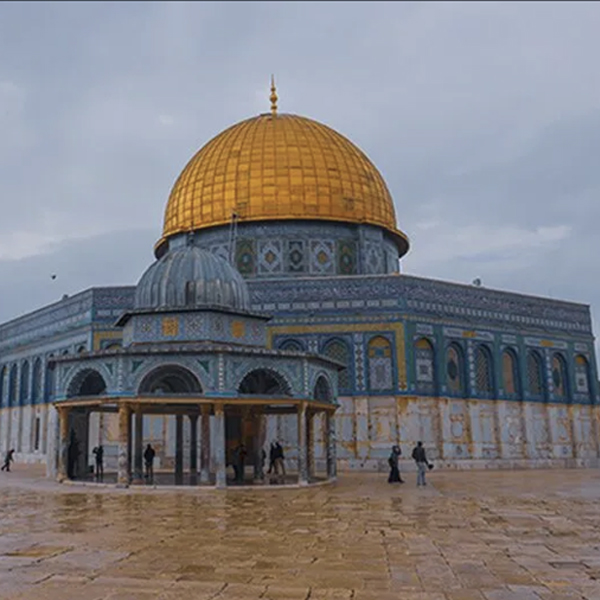
For Muslims worldwide, Jerusalem occupies a central, vital place in their faith and collective imagination. Known as Al-Quds or Bayt al-Maqdis in Arabic, this holy city contains sites of immense religious significance for Muslims around the world. Understanding Jerusalem’s spiritual symbolism, rich history, and modern significance helps underscore why it remains so revered for Muslims across the world today. Sacred Sites and the Revelatory Night Journey In Islam, Jerusalem hosts supremely sacred sites tied to the Prophet Muhammad’s, peace be upon him, miraculous Night Journey described in the Quran and Hadith. During this journey, the Prophet Muhammad, peace be upon him, was transported from Mecca to the “Farthest Mosque”, from where he ascended through the heavens, witnessed wonders, and received instructions from God, specifically on the number of daily prayers. This “Farthest Mosque” is identified as the Noble Sanctuary area in Jerusalem’s walled Old City, where the Dome of the Rock shrine and Al-Aqsa Mosque now stand. During this journey, the Prophet Muhammad, peace be upon him, led all earlier Prophets in prayer. Muslims regard his leading them in prayer before his heavenly ascent as a further fact that makes Jerusalem a blessed sanctuary. The area is thus understood as tying past scriptural prophets and miracles to Islam’s final Prophet, helping cement its sanctity for Muslims. The Prophet Muhammad, peace be upon him, was the final messenger among a line of Prophets, his leading them in prayer symbolized passing the torch from Moses and Jesus to Muhammad, peace be upon them all. Enduring Legacy Under Islamic Rule Besides scriptural significance, Jerusalem also acquired vital importance from its history as a seat of Muslim religious and political authority in the region for over a millennium. After the death of the Prophet Muhammad, peace be upon him, in 632 CE, the second Muslim Caliph or leader, Umar Ibn Al-Khattab, conquered Jerusalem by a peaceful treaty from the Byzantines in 637 CE. Instead of retribution against rival faiths, Umar adopted a policy of religious tolerance by assuring rights and safety for Christian residents, thereby transforming Jerusalem into an open, pluralistic city attracting diverse communities of Muslims, Christians, and Jews. Umar’s example would be followed by subsequent Muslim rulers of Jerusalem, making it a model of interfaith coexistence unmatched in Europe at the time. Over ensuing centuries of stable Islamic rule, the city blossomed into a flourishing center of religion, culture, and trade. Evolving powerful Muslim dynasties like the Umayyads, Abbasids, and Fatimids constructed architectural masterpieces, prime amongst them the exquisite golden-domed mosque of the Dome of the Rock, cementing Islam’s enduring stamp on Jerusalem. Even during the Crusades when it was temporarily lost, Muslims zealously fought to regain Jerusalem given its political and religious capital. After Salah al-Din’s recapture of the city in 1187 CE and under various Turkish, Arab, and Ottoman Muslim rulers until World War I, Islamic Jerusalem persisted as a seat of regional governance with its religious monuments continuing to attract Muslim pilgrims. When Salah al-Din decisively retook Jerusalem from Crusader control in 1187 CE, he upheld the tradition set by the Caliph Umar in 637CE of protecting the rights of minority faiths. Rather than expelling the city’s Christian and Jewish inhabitants after his bloody triumph, he invited Jews to return and settle in Jerusalem to help bolster the population from emigration prompted by the Crusades. Salah al-Din also entered agreements with the city’s Christian clergy, allowing them freedom of worship. His relative tolerance extended the atmosphere of religious pluralism that had historically prevailed under benign Muslim rule in stark contrast to the persecution of Jews and Muslims carried out by the intolerant Crusaders. By enabling peaceful coexistence between faiths, Salah al-Din embodied tolerant Islamic teachings and implemented them in Jerusalem, further solidifying enduring legitimacy among Muslims. The enduring reality of Jerusalem as an axis for Muslim political power and prestige for nearly 1400 years further illuminates why Muslims until today see it as second only to Mecca and Medina in sanctity. Though the Crusades interrupted Muslim rule periodically, Jerusalem mostly retained its Islamic character – bespeaking a legacy still evident through the Old City’s mosques, architecture, culture, and demographics. Various Turkish and Arab Muslim regimes administering Palestine regarded Jerusalem as a regional capital down to the 20th century. These enduring religious and political traces reinforce Jerusalem’s cherished identity for Muslims worldwide. While Salah al-Din’s example reflected inclusive Islamic protection of diversity, current issues are seen by many Muslims as exposing an intolerance towards non-Jewish religious expression under Israeli authority over the Holy City and Al-Aqsa Mosque. Israel’s injustice against the Palestinians curbs the ability of not only Muslims, but even Palestinian Christians to freely worship at churches in Jerusalem holy to their faith, like the Church of the Holy Sepulchre – denying to them what was historically accessible under Islamic administrations of the city. Rather than permitting peaceable worship and access by all faiths as practiced by past Muslim administrations, Israel’s rule over Jerusalem is regarded by many Muslims and even Palestinian Christians as infringing on religious freedom and denying access to holy sites in the city held sacred by Muslims, Christians, and Jews for centuries. Modern Aspirations and Symbolism In current times, religious resurgence and complex sociopolitical struggles have heightened Jerusalem’s importance for Muslims. As political authority over historic Palestine remains under illegal Israeli occupation, Jerusalem embodies hopes for self-determination and stirs broader Muslim solidarity around its Islamic heritage. Many Muslims aspire towards bringing back Jerusalem to its former grandeur under enlightened Islamic rule – which enabled harmonious coexistence between various sects of Islam alongside Christians and Jews. Jerusalem holds high spiritual meaning and stirs immense emotion due to its direct connection to the foundations of Islam. As the holy land where the Prophet Muhammad, peace be upon him, journeyed to during his Night Ascension into the heavens, Jerusalem marks the first direction Muslims prayed towards and its sanctified soil forever links the city to Islam’s very origins. Muslims also believe in all other Prophets who lived in this
ICNA Regional Convention draws 4000 participants in Houston Texas
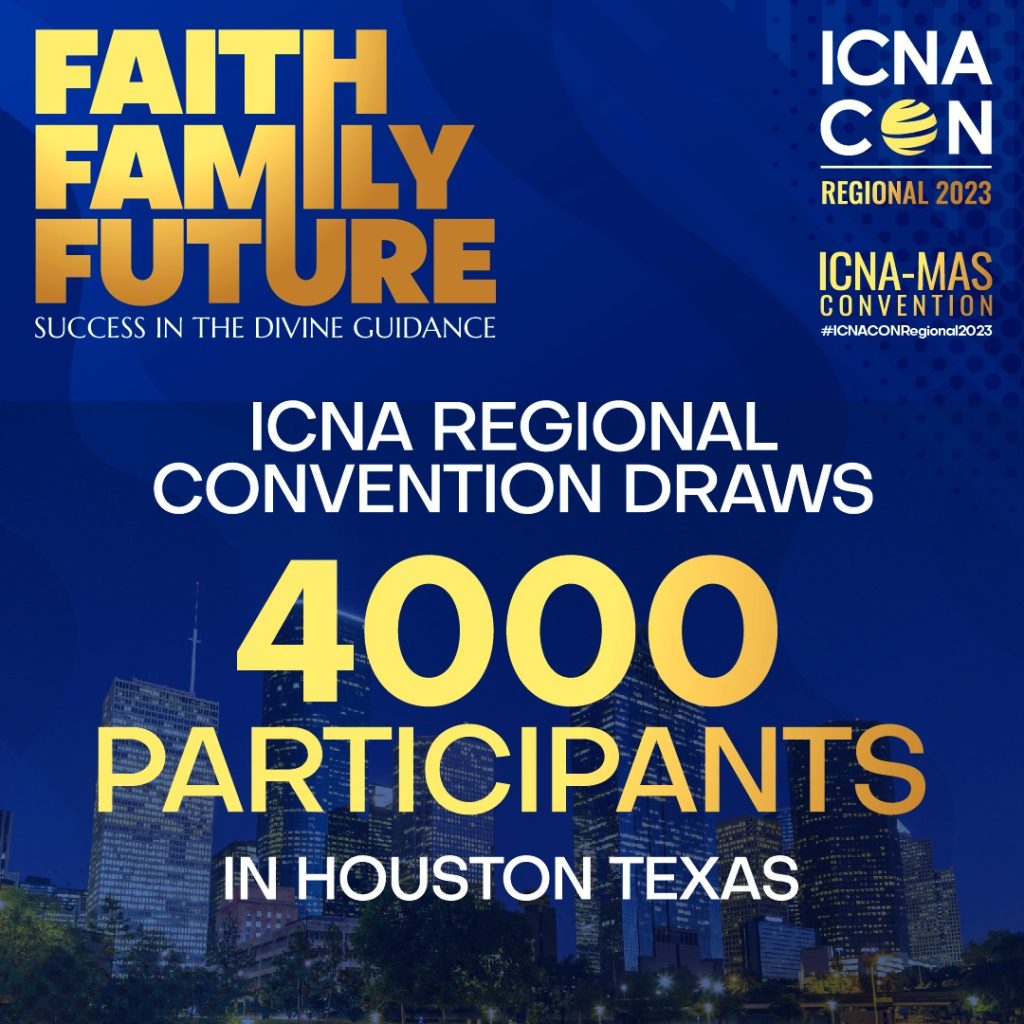
Family, Faith, Future: Success in Divine Guidance – ICNA-MAS Regional Convention 2023 Assalamu Alaikum! The Islamic Circle of North America (ICNA) orchestrated a harmonious gathering during the Thanksgiving weekend in Houston, Texas at the 16th Annual ICNA-MAS Regional Convention. The theme, “Family, Faith, Future: Success in Divine Guidance,” echoed through the corridors, creating an atmosphere of warmth and shared purpose. The convention, a beacon of spiritual, activist, and knowledge-driven pursuits, attracted a diverse gathering eager to explore the interconnected realms of family, faith, and the roadmap to a prosperous future. From November 24th to 26th, attendees immersed themselves in a transformative experience that transcended the ordinary. The convention showcased numerous lectures and workshops tailored for both adults and youth. Esteemed speakers illuminated the path towards open communication, understanding, and love within families. Scholars and spiritual leaders shared profound insights on integrating faith into daily life, offering unwavering guidance to navigate life’s challenges. Moreover, the participants shared personal stories, fostering a sense of unity among participants. The third focal point of the event centered on the future, highlighting the pivotal role of divine guidance in shaping individual destinies. The event’s success was evident, drawing in 4,000 eager participants, hosting over 20 speakers, and facilitating 35 diverse sessions. The support of a dozen sponsors, including ICNA Relief, Helping Hand for Relief and Development, Turkish Airlines, Amana Mutual Fund, and TV One, added a layer of strength to the event, creating enduring memories and establishing a formidable presence that served as a powerful form of Da’wah. Beyond the intellectual nourishment, attendees immersed themselves in activities ranging from a bustling bazaar to matrimonial services, a dedicated sisters’ program, youth lectures, interactive presentations, badminton and table tennis tournaments, fostering a holistic experience for all. At its core, the convention celebrated the pivotal role families play in Islamic teachings. It also echoed Islam’s emphasis on preserving family ties, protecting them from harm, and assigning each member a vital role in life. This holistic approach aligns with the mission of both the Muslim American Society (MAS) and ICNA, dynamic organizations committed to imparting Islamic knowledge, promoting community service, and contributing to societal betterment. The ICNA-MAS Regional Convention 2023 exemplified the transformative power of connecting family, faith, and the roadmap to a purposeful future. As attendees departed, the echoes of discussions on family, faith, and future success echoed. The attendees left inspired and equipped with a renewed sense of purpose, armed with the wisdom imparted by the event’s speakers and the connections forged with like-minded individuals. ICNA-CON 2023 stood as a testament to the power of collective exploration and reflection on the timeless principles that bind us together—family, faith, and the pursuit of a future guided by divine wisdom. With gratitude to Allah (SWT) for His blessings, ICNA and MAS endeavor to enhance their efforts each year, valuing the visitor’s feedback and cherishing the moments spent with the loved ones.
Palestine: Where is God’s Help?
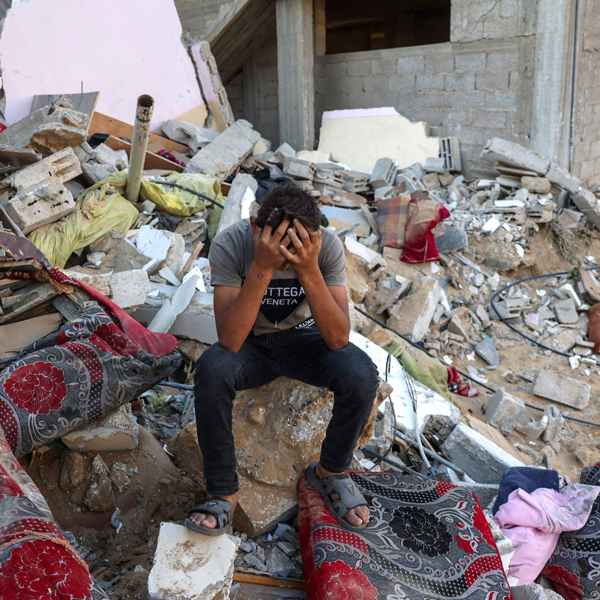
“Where is God’s help,” Muslims ask. In Palestine and around the world, in times of mild, moderate, or extremely severe injustice, the question comes up. We believe fully in the promises of Allah, that He is the wisest of the wise, the Most Merciful, the All-Seeing, and that He is just. We believe that He responds to the prayers of the righteous and the oppressed. Thus, how do we reconcile our understanding of those promises with the extended suffering experienced by individuals or groups of people in the world, such as in Gaza today? First, we begin with foundations. Who is Allah? Allah is the one and only God, Creator and Sustainer of the created world. He is perfect. He has no flaws. When we say Allah is the All-Wise, it means that His wisdom places everything in the right place, right time, and in the right way, sometimes for some reason or wisdom that we cannot know, see, or comprehend with our limited minds. If we were to comprehend them, we would be at the level of the Divine, but we are limited human beings. Allah is perfect, so if He tells us there is no injustice from the Creator to the creation, then we believe in what He says without any doubt whatsoever. We do not question Him, and we do not question Divine destiny, but we may wonder at times about the suffering that we experience or see others experiencing. Second, Allah has informed us about the reality of this world. So, when we wonder about the suffering, we remember that this is the life of trials, sometimes easy and sometimes difficult. What follows is that this life is an opportunity to practice patience and perseverance, an opportunity to do good. And we are to remember that this life is short and fleeting. The afterlife is eternal, the life of consequences, of reward or punishment, and the opportunity for rights to be truly restored in the court of Allah. Allah is aware of the good-doers and promises that an eternal life of bliss will be worth whatever has befallen them in this world, where those in Paradise will have whatever they desire (see Qur’an 50:35). These are the people who express gratitude to Allah for guidance, protection against ongoing difficulties, and the fulfilment of His promise of paradise. The evildoers, the oppressors, those who violate the rights of God and creation, will face accountability as Allah The Just sees fit. He is more just, wise, and merciful than we can imagine, and we are not in a position to question His authoritative decisions. If we establish this fact and believe in it, and are constantly reminded of it, it helps us to frame this life’s trials through that lens. Some people are good, and some are evil, and Allah is aware and will compensate both. The final verse revealed to humankind summarizes this reality perfectly: “Be mindful of the Day when you will be returned to Allah, then every soul will be paid in full for what it has done, and none will be wronged” (Qur’an 2:281). Third, Allah has informed us of His promises and that His promises are true (see Qur’an 35:5). He has informed us about the acceptance of the prayer of the oppressed, the righteous, the one who sincerely calls upon Him, and that not only are His promises true, but also that He is nearby (see Qur’an 2:186). Someone may wonder, then, where is Allah’s response to the du’a of the people of Palestine? The answer to that is found in the narration where Prophet Muhammad said to those with him: “There is no Muslim who calls upon Allah, without sin or cutting family ties, but that Allah will give him one of three answers: He will quickly fulfill his supplication; He will store it for him in the Hereafter; or He will divert an evil from him similar to it.” They said, “In that case we will ask for more [in du’a].” The Prophet said, “Allah has even more” (Musnad Ahmad). While du’a is answered in different forms, the one calling upon Allah is always rewarded for every single sincere du’a, and no du’a goes unanswered. Furthermore, one cannot ignore Allah all year and then make du’a and expect, even demand, it be fulfilled immediately on their terms, giving up if it’s not manifesting the way they requested. Du’a, as we are taught in Islam, is a means of communication and relationship between the Master and the servant, the Creator and the created being. It is an ongoing relationship, whether in times of ease or difficulty, whether to cry out in desperate need or to express gratitude, amplified if the believer is consistently pious all year. Making du’a shows that the believer recognizes how much we are in need of Allah, regardless of how much one has been blessed with worldly things, or not. The truth is that we are always in need of Allah, not just during calamities. Additionally, one does not know which form the du’a is being accepted in, but one must persevere and not be hasty, for Allah’s promise is always true. Fourth, we learn from stories of the most righteous humans, the prophets and messengers. We learn that Allah could instantly change a person’s situation but sometimes tests the believer for various reasons in His unlimited wisdom. If anyone “deserved” instantaneous relief from oppressors and the fulfillment of their requests, it would be the prophets who went through severe pain for years, sometimes decades, with patience and sincere dedication. This is a lesson we learn historically and, also, we see today in the resilience of the righteous Muslims in Gaza. Their faith is tested, their sins are purified, their rank in paradise is raised, their du’a is elevated, their resilience is strengthened, their eman is manifest, their shahaadah (martyrdom) is eternal bliss. Their worldly loss leads to increased gratitude and trust in Allah, and their firmness is inspiration
How to Help Palestine as a US Resident
How to Help Palestine as a US Resident www.icnacsj.org For many, witnessing the destruction of Gaza and the horrific crimes of Israel has led to a state of hopelessness and helplessness. Many are unsure of how to help Palestinians, and specifically Gaza, as the flow of donations and aid is difficult. However, as US residents, there are many actions you can take to help Palestinians. Below is a guide on some actions you can take. 1. Support Boycott, Divestment, Sanctions (BDS) on Israel BDS is a movement to boycott against Israel until it complies with international law and Universal Principles of Human Rights. BDS is a movement aimed to curb international support for Israel because all forms of international intervention and peace-making have failed in making Israel comply with humanitarian law. Palestinians explicitly call for BDS, so BDS should be the first thing on anyone’s list when thinking about how to support Palestinians. On the BDS list, here are companies you should avoid: HP, Siemens, Puma, Sodastream, Sabra, Ahava Cosmetics. You can find the full list on BDS’ website here. BDS support has worked in the past, and can continue to work in the future! Chile suspended a free trade agreement over the Gaza massacre, the Kuwait government has boycotted 50 companies that are linked to occupation, and Israel’s state water has lost contracts due to BDS. This sort of pressure by average people on Israel is a great way to support Palestinians. 2. Attend protests Attending protests is very important – protests show visible support of a cause. The National March for Palestine on November 4 was estimated to have been attended by over 400,000 people. This visible support shows the world, Palestinians, and government leaders that people care about Palestine. Participate in shutdown days, where organizations call for people to walk out of school/work, attend a protest, and cease from buying anything. 3. Put pressure on politicians Tell elected officials to end the siege of Gaza, and to stop US support to Israel. There has been a blockade on Gaza for over 16 years, which has caused generational impact on the lives of Palestinians. Every year, the US gives Israel $3.8 billion in military funding. The US provides Israel money even though Israel does not stick to the US positions on peace in Palestine. The US is complicit in apartheid, it is funding the ongoing ethnic cleansing of Palestinian people. Urge your representatives to end US aid to Israel. 4. Write to companies In addition to supporting BDS, put pressure on companies and corporations to hold them accountable for their role in violating the rights of Palestinians. There are companies in the BDS list who explicitly profit from occupation and apartheid of Israel. Make sure that the money you are earning and spending is not contributing to the occupation of another. 5. Listen and learn from Palestinians With a violent settler-colonial state like Israel, it is a given that the media will uplift Israeli narratives whilst silencing Palestinians. To support Palestinians, you must stand up, speak out, and listen to Palestinian voices. The American Friends Service Committee says, “It is likely that addressing this topic will raise political sensitivities and political concerns among members of your faith community. The best way to address these concerns while promoting learning and action is to take time to listen to Palestinians and Israelis and to learn about the ways in which Israelis and Palestinians are impacted by violence and human rights violations today.” Here is a list of recommended readings and media on Gaza and Palestine, compiled by Decolonize Palestine. Take some time to read the books on this list, and to understand the occupation. Follow Palestinians on social media, especially journalists from Gaza, listen to what they have to say, and be an advocate for them when necessary. We cannot tolerate the Israel genocide of Gaza any longer. We must take actions as those living in the West. We, as average people, can make a change in the way our countries, communities, friends, and family view Palestine.
Giving Tuesday: Unite in Service to Humanity with ICNA!
Every act of generosity is an act of worship. ICNA, a national organization dedicated to supporting the Muslim American community, is leaving a lasting impact through diverse development projects, community services, and long-term relief programs. At ICNA, we believe in the strength of collective goodness. This Giving Tuesday, we extend a heartfelt invitation to join something greater, contributing to our mission of providing humanitarian relief and making a meaningful impact on those in need. Guided by the principle that service to humanity is service to Allah, ICNA calls upon you to make this Giving Tuesday a day of unity and compassion through your generous donations. Together, let’s create a lasting difference that echoes a lifetime of positive change. May your generosity become a source of blessings, not just for you but for the lives you touch. Join us in this noble endeavor to make Giving Tuesday a day that resonates with unity, compassion, and everlasting impact. Donate Now
PALESTINE CRISIS
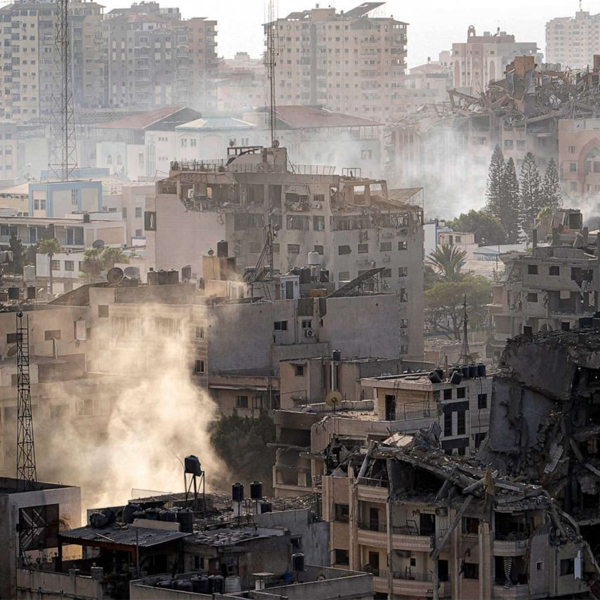
PALESTINE CRISIS www.icnacsj.org Brief History Palestine is the Holy Land, significant in all three major religions – Islam, Christianity, and Judaism. The people of Palestine, be they Muslim, Christian, or Jewish, lived in a peaceful and prospering society, engaging in trades such as fishing and farming, and contributing to a shared and rich culture. Palestine was ruled by the Ottoman Empire until it was captured by the British. In 1917, the British Government promised the land of Palestine to the Zionist Jews as a homeland for the Jewish people. Jews began to migrate to Palestine with the help of the Zionist movement at the start of the 19th century. After WWII, Jewish migration to Palestine especially intensified. The Ally Powers recognized and supported the new state of Israel on this colonized Palestinian land. This resulted in the Nakba, a catastrophe that ethnically cleansed over 800,000 Palestinians, including Muslims, Jews, and Christians, from their land through evacuation, displacement, and genocide. Since then, Global powers have legitimized the occupation of Palestine by the Israeli state. Israel has continued to confiscate more and more land from the indigenous Palestinian people, forcing them into smaller areas of land and controlling every aspect of Palestinian life to maintain control over the region through a cruel system of apartheid. Since October 7, 2023 Israel has implemented a campaign of indiscriminate attacks on Palestinians in Gaza that has resulted in the murder of more than 10,000 Palestinians (so far), the majority of whom are innocent civilian women and children. Israel has tightened its already existing siege on Gaza, blocking access to water, fuel, cellular service, electricity, and humanitarian aid. The attacks on Gaza have left over 1,000,000 people displaced, and destroyed hundreds of apartment buildings, schools, mosques, churches, and multiple hospitals. Israel’s war crimes include using illegal tactics such as white phosphorus and chemical weapons to maximize the damage and indiscriminately attack Gazans. Israel has also bombed neighboring countries, detained and killed Palestinians in the West Bank, and expanded into a ground invasion of Gaza. We are witnessing a genocide and humanitarian catastrophe unfold in real time. Talking Points 1 – Demand a Ceasefire: We are witnessing crimes against humanity with the current genocide of innocent Palestinians in Gaza. A path to peace in the region requires an immediate ceasefire that ensures that no more civilians will be harmed or killed. 2 – Equal Citizenship Rights: Currently, Palestinians holding residency in the Occupied Palestinian regions are not considered citizens of Palestine, until such a time as Palestine is declared an independent state. However, the occupying power of Israel also does not consider Palestinians to be citizens, leaving them without a passport or ID card that is recognized in much of the world. This is a violation of international law, and a glaringly obvious sign of an apartheid state. We must hold Israel accountable for the quality of life of the Palestinian people. 3 – Acknowledge the Right of Return: WhenPalestinian families were forcibly removed from the Currently, Israel operates a siege over Gaza, a portion of land bordering the Mediterranean Sea currently under Israeli occupation. Gaza is described as the largest open-air prison in the world. The West Bank is another region that is under Palestinian authority by legality but controlled heavily by the Israeli state. The over-militarized power has used undue force to intimidate and dehumanize Palestinian citizens, surveil and control movements, and even unlawfully arrest, detain, and kill them. Palestinians have struggled to break free of the apartheid state that has been implemented by the Israeli Government, as recognized by Amnesty International as well as renowned human rights organizations across the world. Israel’s abuse of human rights and consistent violation of international law are also well-documented and have been recognized by the United Nations. Still, the Israeli Government continues to abuse the indigenous Palestinian people and has rendered them stateless to prevent them from returning to their land. Palestinian people continue to resist, whether in Gaza and the West Bank or across the world where they exist as refugees and immigrants remembering their homeland from afar. Current Situation homes and land they had held for centuries, they were prevented from returning, and those same homes were illegally given to settler families from across the world. It’s time to allow Palestinian people back into their own homes and into their lands. The ability to return home is a basic human right for all and a principle of international law. 4 – End the Illegal Occupation: The only way to bring true peace to Palestine and the Palestinian people is to end the illegal occupation of Palestine. Action Items Engage with Representatives: Contact your members of Congress ASAP and urge them to support an immediate ceasefire and a just and lasting resolution to the Israeli-Palestinian conflict. Participate in Peaceful Protests: Join or organize peaceful protests advocating for justice, equality, and an end to the occupation. Raise Awareness on Social Media: Utilize social media platforms to share information, stories, and resources that shed light on the Palestinian struggle. Amplify Palestinian voices to raise awareness. Support Humanitarian Organizations: Contribute to organizations working to alleviate the humanitarian crisis in Palestine, providing direct aid to those affected by the conflict. Visit www.hhrd.org as one example. Educate Others: Foster understanding by educating friends, family, and colleagues about the historical context and current realities of the Palestinian situation.
ICNA – MAS Regional Conventions

All Praises are for Allah Lord of all that exists and peace and blessings of Allah be on His final Messenger and his household. You are invited to attend any of these amazing regional conventions happening in different cities. Join with your families and friends to enjoy the great environment, to learn more about our Deen, and to strengthen our communities even further. Bazaar | Lectures & Workshops by Renowned Speakers | Parallel Youth Conferences | Panel Discussions | Dawah Open Houses | Reverts Stories Sessions | MCNA Kids Camps | Health Fair | Matrimonial Services | Robotics | Quran Competition | Speech Competition | Career & Job Fair | Table Tennis Tournament | Badminton Tournament | Islamic Art Workshop & Exhibition | Ethnic Food Bazar