


Dismantling Misconceptions about Islam Portrayed on TV

Introduction: Perceptions Shaped Through Media The role of television in today’s world is vital in shaping the perceptions of millions of individuals regarding their understanding of different cultures, religions, and communities. Unfortunately, Islam, one of the world’s largest religions, is often underrepresented or misrepresented in mainstream television shows and movies. These misrepresentations are detrimental as they perpetuate stereotypes about Muslims, influence hatred, and contribute to Islamophobia. To work against these harmful stereotypes in the media, it is important to dismantle them and understand new ways to promote accurate and nuanced portrayals. According to a report issued by the USC Annenberg Inclusion Initiative, in which researchers investigated 200 top-rated television shows from 2018 and 2019 that aired in several countries and surveyed 8,885 characters with speaking roles, it seemed that the majority of Muslim characters, if represented, were misrepresented1. Despite Muslims being the most racially and ethnically diverse group in the world, the majority of Muslim characters were depicted as Middle Eastern or North African men, and were often linked to violent acts and behaviors. While 30% of the characters were perpetrators of violence, 40% were targets of such attacks. Furthermore, less than a third were portrayed as native English speakers, highlighting Muslims as “foreigners,” according to NPR2. Muslim women were severely underrepresented, and when they were– they were portrayed as “endangered” or “fearful.” Due to a lack of understanding about Muslims and their diverse communities, stereotypes such as Muslims being violent or endangered are perpetuated in the media to bring about a wrongful understanding to individuals about what Islam truly represents. Understanding and Identifying Misrepresentation There are many examples in which Muslims are misrepresented on television, and it may be important to identify a few in order to be able to recognize them when they appear. One example is the television series “Homeland,” which depicts Muslim characters as terrorists or having terrorist sympathies. The representation in this show feeds into the narrative that Muslims are a threat to national security. According to the Harvard Political Review, “The primary goal for Carrie Mathison, the female protagonist, is to take down the fictitious terrorist leader Abu Nazir. Nazir who, along with all the other “bad guys” in the show, are Muslims.”3 While the show isn’t completely black and white and also depicts the American government as corrupt, there are many subtle instances of Islamophobia that may perpetuate stereotypes within the show. Other television shows, including “24” and “24 Legacy,” and films, such as “True Lives,” “American Sniper,” and “Executive Decision,” further associate Islam with terrorism and violence which contributes to Islamophobia. These examples highlight the need for greater diversity and accurate representation of Muslims in movies and TV shows. Correcting Misconceptions: Islam’s Stance Looking at the consistent issue of misrepresentation, it is important to understand what Islam really says about violence, terrorism, and even women’s oppression that these shows are depicting– in order to recognize the casual Islamophobia these shows portray. Islam is a religion of peace and mercy, and does not condone terrorism in any form. According to the Quran, the Holy book of Islam, and the Sunnah, the teachings of Prophet Muhammad (peace be upon him), murder is a major sin in Islam. It was even warned that on the Day of Judgement, “The first cases to be adjudicated between people on the Day of Judgment will be those of bloodshed.”4 God also says in the Quran: “God does not forbid you from showing kindness and dealing justly with those who have not fought you about religion and have not driven you out of your homes. God loves just dealers.” (Quran 60:8) The act of inciting violence or terror in the hearts of defenseless civilians, the bombing of innocent men, women and children, and the destruction of civilians’ buildings and properties, are all detestable acts in light of these Islamic texts as well as others. The violent and terroristic events associated with Muslims therefore have nothing to do with Islam, as a person who commits these actions would be guilty of violating the laws of the faith. Many are susceptible to the stereotypes regarding Islamic terrorism due to the actions of a few extremist individuals who do not represent Islam for what it truly is. What about TV shows that depict Muslim women to be oppressed? Shows such as Netflix’s Elite, which depicts a Muslim girl taking off her hijab for a guy and due to her subjection to the overbearing control of her father, push stereotypes that Muslim women are oppressed or even under a man’s control. The truth is, while the Quran and Islam emphasize the well-being of women, certain cultural traditions often discriminate against them.5 The Quran admonishes men who oppress or ill-treat women6: “O you who believe! You are forbidden to inherit women against their will. Nor should you treat them with harshness, that you may take away part of the dowry you have given them – except when they have become guilty of open lewdness. On the contrary, live with them on a footing of kindness and equity. If you take a dislike to them, it may be that you dislike something and Allah will bring about through it a great deal of good.” (Quran 4:19) Islam was one of the first religions to ban female infanticide, promote marital equality, grant women financial rights, allow for divorce, and promote shared parenting.5 However, the misalignment often arises from cultural practices, where husbands assume positions of authority, divorce is made challenging, and certain customs distort the original intent of practices such as polygamy and veiling, rendering them instruments of oppression. TV shows and films therefore portray negative cultural traditions instead of the true image of Islam. Responsibility of Media: Shaping an Informed and Inclusive Future Therefore, accurate portrayals of Islam on television are crucial for fostering understanding and promoting tolerance. TV shows and movies have the power to break down barriers and encourage dialogue by portraying the true essence of Islam, rather than continuing to showcase it as a religion
The passing of Allama Delawar Hossain Sayedee
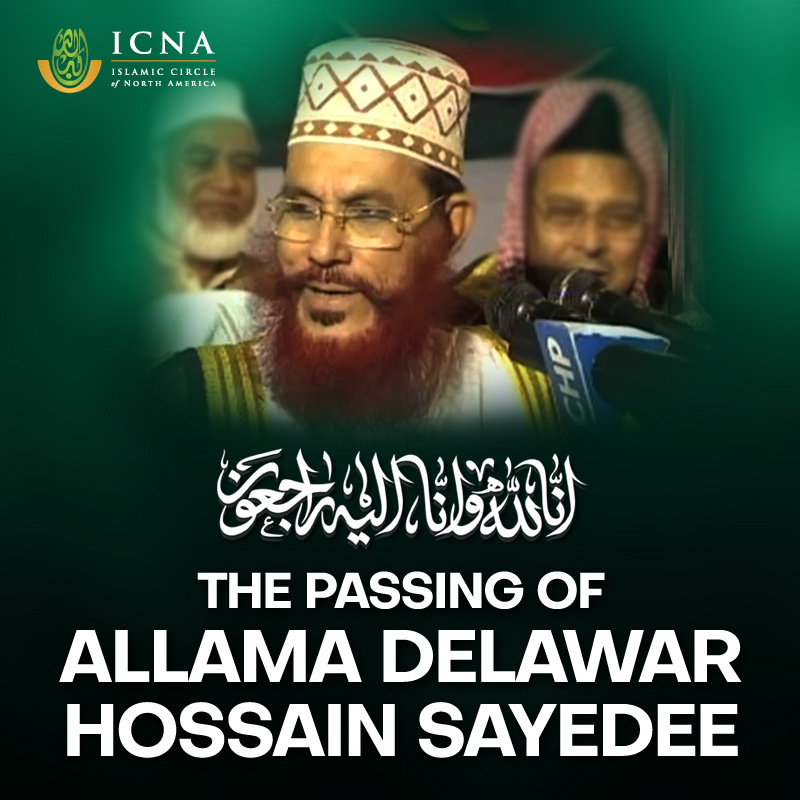
Inna Lillahi wa Inna Ilaihi Raaji’oon. The Muslim Ummah has lost a great legend. It is with profound sadness that ICNA announces the passing of Allama Delawar Hossain Sayedee while in prison. He was the Naaib Amir of Bangladesh Jamaat-e-Islami. He was an internationally acclaimed exegete (Mufassir) of the Qur’an and former Member of Parliament. This great leader was unjustly imprisoned for well over a decade and was never given a chance of a fair trial. According to reports, even his family was not allowed to meet him after his recent illness and heart attack. The death of Allama Sayedee is a great loss to this Ummah and particularly to the people and the Islamic Movement of Bangladesh. It is very difficult to describe in words the level of impact that Allama Sayedee had in the lives of people, worldwide. His passion, his dedication, his charisma, his eloquence and yet so simple and humble, were beyond captivating. He had a dynamic personality with a resoundingly impactful legacy – a truly unique icon whose contributions will benefit generations to come Insha Allah! May Allah have mercy on him and enter him into the highest levels of Paradise. Allama Delawar Sayedee has joined those great souls that have returned to Allah SWT after sacrificing all they have in this world, for Allah SWT’s sake. May Allah accept him as a martyr and fulfill his dream to become a Shaheed. By the Will of Allah their sacrifices will not be forgotten and the quest for justice and Deen continues. Inna Lillahi wa Inna Ilaihi Raaji’oon!Image Courtesy: The Muslim NewsImage Courtesy: Siliconeer.com
The Miracles of the Qur’an’s Literature: Unveiling Divine Eloquence
The Qur’an: A Literary Masterpiece That Transcends Generations The Qur’an, the holy book of Islam, is widely regarded as a literary masterpiece. Its profound impact on Arabic literature, its eloquence, and the timeless message it conveys have captivated both scholars and believers for centuries. The Qur’an’s literary miracles extend beyond its religious significance, enticing readers of diverse backgrounds with its linguistic brilliance and rhetorical power. In this article, we will explore some of the remarkable features of the Qur’an’s literature, shedding light on its unique qualities that attest to its divine origin. Linguistic Excellence The Qur’an was revealed in the Arabic language, and it showcases unparalleled linguistic excellence. The book’s language is pristine, with a flawless blend of eloquence, rhythm, and precision. Despite being revealed more than 1400 years ago, the Qur’an’s linguistic beauty remains unmatched. Its expressive metaphors, captivating narratives, and compelling arguments demonstrate the ingenuity of its composition, leaving a lasting impact on those who delve into its verses. For instance, Quran 54: 1-5 with their rhythmic structure and poetic eloquence, illustrate the Qur’an’s linguistic excellence. Verses 1-5 describe the event of the splitting of the moon, using concise and powerful language that evokes a sense of awe and wonder. Linguistic Miracles One of the Qur’an’s remarkable literary miracles lies in its linguistic structures and patterns. From intricate rhetorical devices to mathematical phenomena, the Qur’an displays an array of linguistic marvels. One such example is the frequent use of symmetric and balanced sentences, demonstrating a precise balance in word count and rhythmic arrangement. This structural consistency adds to the Qur’an’s aesthetic appeal and reinforces its divine nature. Chapter 55, named The Most Gracious (Al-Rahman) showcases the Qur’an’s linguistic miracles. The chapter repeatedly poses the rhetorical question, “So, which of the favors of your Lord would you deny?” This refrain creates a rhythmic pattern that emphasizes gratitude and reflection, leaving a profound impact on the reader. Eloquence and Sublimity The Qur’an’s eloquence transcends conventional human composition. Its verses possess an inherent power to stir emotions, inspire contemplation, and challenge intellect. The language flows effortlessly, captivating the reader with its profound depth. The Qur’an’s ability to evoke strong emotions and to instill tranquility in the hearts of its readers is a testament to its profound impact. Chapter 1, also known as The Opening, represents the eloquence and sublimity of the Qur’an. It is a concise chapter of seven verses, yet its words carry immense weight, expressing the believer’s plea for guidance and the recognition of Allah’s sovereignty. Vivid Imagery and Parables The Qur’an employs vivid imagery and parables to convey its messages effectively. It employs metaphorical language to paint vivid pictures in the minds of its readers, enabling them to visualize concepts and moral lessons. These literary devices enhance comprehension and create a lasting impact, fostering a deeper understanding of the Qur’an’s teachings. Chapter 16 named The Bees gives the parable of the bee and illustrates the Qur’an’s use of vivid imagery. The chapter describes the bee’s meticulous gathering of nectar and the production of honey, drawing a parallel to the order and purpose in the universe, thereby inviting reflection on Allah’s wisdom and creation. Cohesion and Thematic Unity Despite being revealed over a period of 23 years and covering various subjects, the Qur’an exhibits remarkable thematic unity. Its verses seamlessly interconnect, forming a cohesive narrative that addresses diverse topics such as theology, morality, history, and guidance for personal conduct. The coherent structure of the Qur’an testifies to its divine authorship, as the intricate interplay of themes and ideas could not have been achieved through human endeavor alone. The second chapter of the Quran is the longest chapter in the Quran. Despite its length, it exemplifies the Qur’an’s thematic unity. It covers a range of subjects, including faith, law, and guidance for the community, while maintaining a consistent narrative thread that emphasizes the importance of obedience, justice, and righteousness. Qur’an’s Unique Qualities: A Divine Testament The literary miracles of the Qur’an stand as a testament to its divine origin. Its linguistic excellence, eloquence, vivid imagery, and thematic unity all combine to create a profound impact on readers. The Qur’an’s timeless literature transcends cultural and linguistic barriers, captivating hearts and minds across generations. Its unique qualities continue to inspire, offering guidance and solace to those who seek truth. As we delve into the literary miracles of the Qur’an, we are reminded of its divine message and the endless wonders it holds for those who explore its pages.
Morality & Islam

Societal Changes and Shifting Morality A few months ago, while scrolling YouTube, an 80s movie I’d watched with my son appeared. Clicking for a glimpse, I noticed the actresses’ dresses, reminiscing about how society has changed due to technology. Everything, from fashion to eating habits have changed,, and opinions on right and wrong are now up for debate as the world rapidly transforms. What is Morality and Why is it Needed? According to Oxford Dictionary morality is “a particular system of values and principles of conduct, especially one held by a specified person or society.” Humans possess a fundamental sense of morality, but its intricacies can lead to complexity. Take, for instance, those who condemn murder and capital punishment, yet support abortion as a matter of choice. If moral values are fluid and open to change according to the whims and wishes of a group of people, it would cause massive corruption as the powerful in any society will assert their influence and suppress the masses. One might argue that constitutional laws are based on logic to cater to the needs of the people. However, how do we interpret the vast difference in these laws? Consider the diverse legal age of marriage worldwide: some places allow marriage at 12, deeming it acceptable, while elsewhere, it’s classified as child abuse. Surprisingly, in California, there is no legal age for marriage while New York amended its laws not too long ago. We assume that we have the liberty and a free will to live by our wishes however we want. In reality, at any given time, we are constantly following some type of standard. It is the conditioning that we are exposed to in any given society that forms our perception and ideas about life. That is the reason why different regions have different cultures and traditions. So if the cultures are so vastly different from each other then how do we know if a certain speech or action is right or wrong? Who determines what is evil and what is good? How do we know if a certain action is beneficial or a means of corruption? One nation may be called civilized at a given time, yet a change of era may characterize that nation as not so civilized after all. Who Sets the Standards? Science is usually taken as a criterion whereby everything is based on qualitative and quantitative evidence. As we progress technologically, we are able to make better equipment to measure and experiment with. This enables us to measure things more appropriately and revise the scientific theory. There will never come a time when we can say that science can explain all the things in the universe as facts. After all, we have been in this universe for millions of years and the scientists can’t agree on some of the basic theories. Similarly, the concept of morality varies greatly across cultures and eras. Culture is also one such lens through which people view morality. In pre-Islamic days, it was an acceptable practice to bury baby girls alive. Nowadays, in some countries this same practice has shaped into aborting female fetuses. One can clearly see the problem of taking morality from culture alone. Islam’s Perspective Islam emphasizes morality and provides well-established laws and principles for a healthy society. Unlike cultural perceptions of right and wrong, Islamic laws are unchanging, yet adaptable to diverse cultures worldwide. What was immoral in the past remains so, regardless of societal norms today. The Islamic guidelines have endured the test of times and there is nothing that needs to be reformed. These laws are God centric and emanate from belief in one true God. It’s this very belief that transformed an unruly, divided pre Islamic society into one of the greatest civilizations of the world known as Islamic civilization. Oneness of God provides an anchor for a society that benefits the whole of mankind. Embracing Divine Guidance The One who created us has the wisdom to know what is good for us. Just like every sophisticated machine or program comes with its user manual, we too are given instructions to abide by so as to achieve a balance in life and prosper collectively. There is no other creation on this planet who is intellectually superior than us. Then how can we not have guidelines? One argument against Islam is that it imposes numerous restrictions, and some argue that humans should have more freedom to pursue happiness. However, consider the implications of complete freedom, like someone crossing a red light for their momentary joy. If this mindset becomes widespread, it could lead to chaotic and dangerous consequences. How Divine Guidance Shapes Society’s Well-Being and Choices As of 2020, the USA had over 16,000 rehab centers, and the numbers are increasing. However, in Medina, when divine revelation prohibited alcohol, the streets were filled with discarded alcohol, and there was no need for rehab centers. This was because the faith of the people in the Almighty and All-Wise God led them to believe in adhering to the code of life revealed by Him. This is not to take away from the importance of rehab centers, but religion and God play an important role in the healing process. Understanding that what God legislates is ultimately moral and in the best interest of the individual and society gives one strength to make the right decision. Have more questions? Call 877-WhyIslam, you deserve to know!
France’s Institutional Problems: Racism
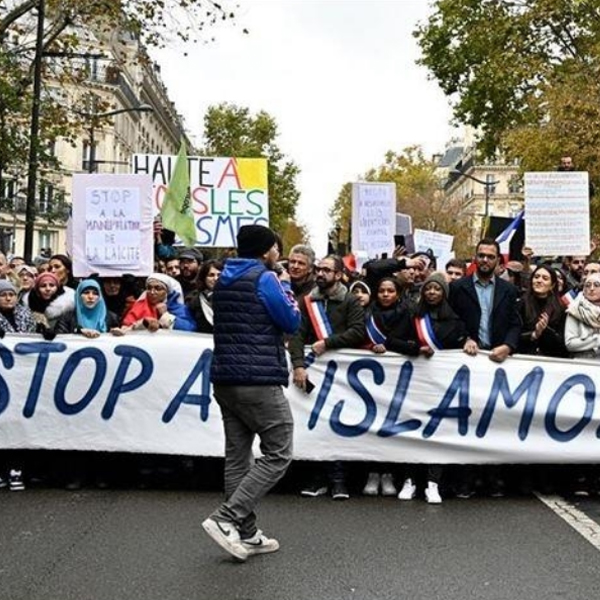
Lina B. Date published: Wed, 26 July 23 In France weeks ago, Nahel M. was killed by French police at a traffic stop. The 17-year old was from the suburbs of Paris. The killing sparked protests amongst French Algerians, French Moroccans, French Muslims, and Black French people. Most of these groups live in underserved minority areas. In Europe, racism, Islamophobia, and anti-Semitism are embedded within the fabric of society, although many Europeans will claim that color does not matter. Hiding behind perceptions of color-blindedness helps members of Europe’s privileged classes to ignore systemic issues. In many cases, it is illegal to even compile racial statistics in France . The New York Times reports an investigation by France’s Defenseur des Droit that “young men perceived to be Black or Arab” were 20 times as likely to be subjected to police identity checks than other members of the population. In any case, it is difficult to speak about race and other institutional systems in Europe, and specifically France. France’s history with colonialism can be understood as one of the primary reasons behind its racism and institutionalized discrimination against minority groups. French colonialism was brutal. Even now, in the era of “post-colonialism,” France’s former colonies are still paying France a reparation tax – a tax for the inconvenience independence of the colonies caused to France. French president Macron refuses to ask for forgiveness for the crimes of the colonization of Algeria, despite Algeria’s request to do so. The birth of the idea of Western civilization is a precursor, or perhaps even a framework, to how race is understood today. French colonial and imperial propaganda has depicted the SWANA region, South Asia, East Asia, and Africa as lands of “backwardness, lawlessness, and barbarism tamed by French rule.” Vinecia Perkins in an article on the constitutional stratification of French ethnic minorities says that French culture sees itself as superior to all non-European cultures. The notion and rhetoric of “otherness” and pseudo-scientific racism has persisted amongst French treatment of its minorities from the expulsion of Jewish people from France to French participation in the Transatlantic slave trade. In French textbooks, colonialism is taught as having positive aspects. Politician Marine Le Pen has said that French colonialism gave former colonies “a lot.” Le Pen has made an influential political career despite racist statements like this, signifying that racism in France is persistently supported. Jean Beaman in the Georgetown Journal of International Affairs wrote back in 2021 that the ethos that is put forth regarding what makes an individual French is significant in understanding French color-blindedness. The values of “liberté, égalité, et fraternité” are seen as French. If an immigrant ascribes to French Republican values, they are French. Bauman argues that this is an assimilationist framework, where “individuals relate to the state as individuals and not as members of identity groups.” French Republicanism negates race and ethnicity, not treating them as identity groups. When these markers are not treated as identity groups, there can be little to undo harm and state violence against these groups. It is clear that the French state treats those who are non-white as an inferior class of people. However, when race is not a marker of identity, then the French state can claim that there is not institutional and discrepant behavior with those of minority groups. “Part of French racial discourse is actually not even using the word “race” in government documents. And as French scholar Mame-Fatou Niang remarks, there is no French word for ‘blackness.’ Despite French Republican ideology which denies race as salient, it nonetheless structures boundaries of inclusion and exclusion.” Jean Bauman, Georgetown Journal of International Affairs
Significance Of Ashura – 10th Of Muharram
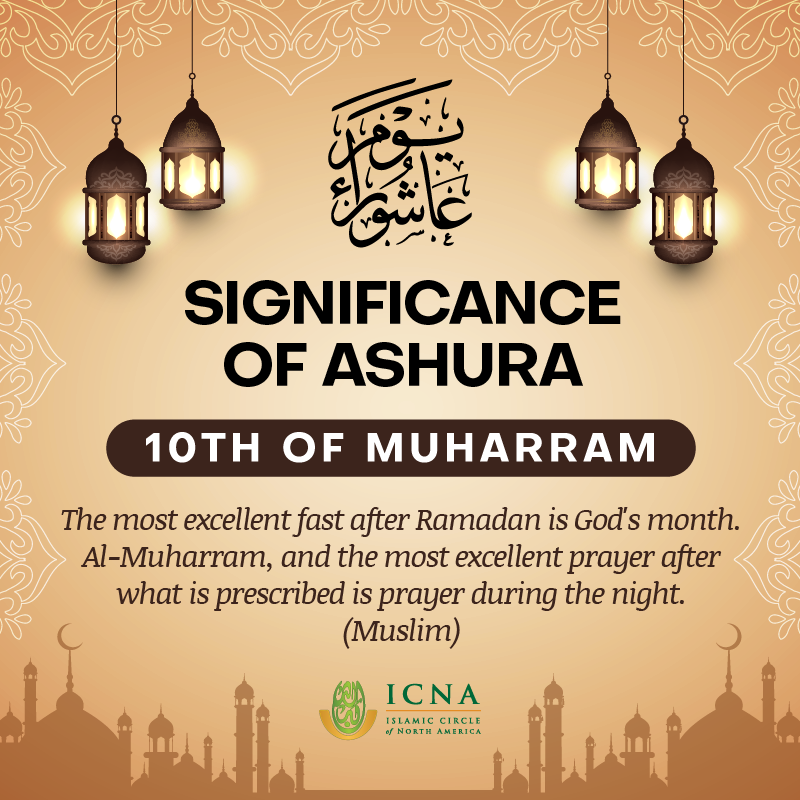
Significance Of Ashura – 10th Of Muharram By Sh. Abdool Rahman Khan بسم الله الرحمن الرحيم Ashura 2023, 1445 We begin reflection of Ashura by the Words of Allah SWT 4Indeed, Pharaoh transgressed in the land and divided its people into groups. He persecuted a group among them by slaughtering their sons and keeping their females alive. Surely, he was one of those who spread corruption (on earth) [28:4] Muharram is from the sacred months and comes at the beginning of the FOUR of them. Al Hassan Al Basree (May Allah have mercy on him) said: Allah Almighty opened the year with a sacred month, that is Muharram and concluded the year with a sacred month that is Dhul Hijjah. It is the only month that is known as “The Month of Allah” as in the Hadith where Rasoolullah SAS calls it : شَهْرُ اللَّهِ الْمُحَرَّمُ Narrated Abu Hurairah (RA), Rasoolullah SAS said: أَفْضَلُ الصِّيَامِ بَعْدَ رَمَضَانَ شَهْرُ اللَّهِ الْمُحَرَّمُ وَأَفْضَلُ الصَّلاَةِ بَعْدَ الْفَرِيضَةِ صَلاَةُ اللَّيْلِ مسلم The most excellent fast after Ramadan is God’s month. al-Muharram, and the most excellent prayer after what is prescribed is prayer during the night. Muslim Al-Qurtubi said: Fasting in Muharram is the best fasting, because it is the beginning of the year and it opens with fasting, which is the best of deeds. Ashura Ashura The 10th of Ashuraa is one of such virtuous days of Fasting A day when Allah SWT grants victory to o Prophet Musa (AS) and the Believers o While defeat was granted to falsehood – to Pharaoh and his people. This victory is still a matter of consideration for us. o We are still in a world of Pharaohs fighting Believers o So, we sure can learn from the struggle that Prophet Musa (AS) had with the ruthless Pharaoh. Thus, it is highly recommended for us to fast on this day out of gratitude to Allah A lesson how Allah SWT causes His righteous servants to inherit the earth. As Allah Almighty said: Quran وَعَدَ اللَّهُ الَّذِينَ آمَنُوا مِنكُمْ وَعَمِلُوا الصَّالِحَاتِ لَيَسْتَخْلِفَنَّهُمْ فِي الْأَرْضِ كَمَا اسْتَخْلَفَ الَّذِينَ مِن قَبْلِهِمْ Allāh has promised those who have believed among you and done righteous deeds that He will surely grant them authority on the earth just as He granted it to those before them An Nur (24:55) The martyrdom of the beloved grandson of Rasoolullah SAS We also recall another incident in the history of Islam which also took place on the 10th of Muharram and that is the martyrdom of Hussain (RA) the beloved grandson of Rasoolullah SAS. Hopefully next year we will discuss this in details by the grace of Allah SWT and this too is a struggle between the faith and sincerity of Hussain (RA) and insincerity and ruthlessness of those clamoring for power. The Messenger of Allah PBUH said: “Hussain is from me, and I am from Hussain . Allah loves whoever loves Hussain. Hussain is a generation among the generations.” (Tirmidhi) The Martyrdom of Imam Hussain (RA) – Click here to Read By Syed Abul Aala Maududi History of Prophet Musa (AS) Musa AS was a descendant from the lineage of Prophet Ibrahim (AS), and from the lineage of Prophet Yaqub (AS) Over time, the people forgot the message of Islam o Eventually they were overtaken by Pharoah – one of the mightiest rulers in history o Egypt was the rich superpower of the world at that time. However, he was also considered to be the most ruthless and oppressive leader in history and in addition he had power, authority and wealth. No wonder why his story is depicted in so many verses in The Quran as a warning to today’s Pharaoh. And a hope for Believers. Power and wealth made him exceedingly arrogant, and he went so far as to proclaim himself to be the lord of creation. Allah SWT says: Then he gathered his people and cried aloud, (23) Saying: “I am your lord, most high” (79:23-4) Pharaoh, together with his ministers, Qarun and Haman, ruled the land with an iron rule. Pharaoh heard that a leader will arise from Bani Israel As time went by, Pharaoh was informed of the legacy of Prophet Ibrahim (AS) which Bani Israel would often talk about that there would be a leader from Bani Israel who would again lead them to a position of strength. Pharaoh was greatly disturbed by these predictions, and as a precaution, ordered that all the pregnant women of Bani Israel be strictly monitored. No woman delivered a baby boy without the Pharaoh’s army knowing about it, and thus these newborns were immediately killed in cold-blooded, systematic infanticide. o Just imagine the horror! The murder of innocent babies! In the Quran Allah SWT says: 4Indeed, Pharaoh transgressed in the land and divided its people into groups. He persecuted a group among them by slaughtering their sons and keeping their females alive. Surely, he was one of those who spread corruption (on earth) [28:4] So, Pharaoh began this merciless killing of the young male babies o How often we see this repeated throughout generations by tyrants and even till this day and age of a so-called civilized world of human rights. Another evil of Pharaoh was to divide Bani Israel and enslaving them. Today the Muslim Ummah has also become victim of this plot. Ibaadallah! We are one Ummah, but unfortunately, we succumb to the same tactics what Pharaoh did to Bani Israel. Alternate killings of the boys So, Musa (AS) was born the year when the male infants were to be killed while his brother Harun was spared as Pharaoh was advised to alternate the years of killing to male born. According to all the decree of the land, Musa AS should have been killed. However, Musa’s (AS) life demonstrates o the power of the Qadr of Allah above all human planning no matter how powerful their plots are When the mother of Musa was pregnant for him, she went completely unnoticed. But
Respect The Quran Campaign
#Respect The Quran Campaign ICNA strongly condemns the burning of The Quran in front of a Masjid in Sweden on The Day of Eid-ul Adha. All this is happening under the guise of “freedom of speech”. In January of this year also, a Danish-Swedish man burnt a Quran in front of the Turkish embassy in Stockholm and that too was endorsed by the Swedish government. Such despicable act goes against the principles of respect, tolerance, and freedom of belief. Everyone should have the right to practice his or her religion peacefully. Such a vile act towards Islam’s most sacred text is deeply offensive and disrespectful to the beliefs and sentiments of over two billion Muslims worldwide. Insulting or demeaning other religions solely in the name of “free speech” is deeply hurtful, disrespectful, and can contribute to the discord in society. The west, time and again has proved that their support for freedom of speech is “selective”. Where on one hand they allow and support hateful acts like this one to happen while on the other hand they do not allow oppressed individuals and communities to raise their voice against the barbarism they face in countries like Palestine and Kashmir. While individuals may have the legal right to express their opinions, it is crucial to exercise that right responsibly and with sensitivity towards the beliefs and feelings of others and governments must not condone when it is more of a hate speech than free speech. If it was the other way around, there would have been a big hue and cry. But just for the records, it is prohibited in Islam to use verbal insults to deities of other faiths let alone to burn their sacred texts. If any true Muslim were to have done that, the Muslim world would outrightly condemn it. The timing of the burning of Islam’s holy book, during the important Muslim holiday of Eid al-Adha, is a further insult to the entire Muslim World. This happened on the Day when the sacrifice of Prophet Abraham (peace be upon him) of his son Prophet Ismail (peace be upon him) is commemorated. ICNA hopes that we can learn from one another, rather than using this so-called “freedom of speech” as a justification for spreading hate, inciting violence, or perpetuating discrimination. While the door of repentance is always open, the aggressor should know that such an act, Allah Almighty says in 9:63: “Do they not know that whoever opposes Allah and His Messenger will be in the Fire of Hell forever? That is the ultimate disgrace. JUMA KHUTBA TALKING POINTS بسم الله الرحمن الرحيم Khutbah: Why 2 Billion Muslims respect The Quran By Sh. Abdur Rahman Khan -ICNA قَدْ جَاءَكُم بَصَائِرُ مِن رَّبِّكُمْ ۖ فَمَنْ أَبْصَرَ فَلِنَفْسِهِ ۖ وَمَنْ عَمِيَ فَعَلَيْهَا ۚ وَمَا أَنَا عَلَيْكُم بِحَفِيظٍ ﴿١٠٤﴾ Indeed, enlightenment have come to you from your Lord. So whoever chooses to see, it is for their own good. But whoever chooses to be blind, it is to their own loss. And I (Muhammad PBUH) am not a guard over you. (6:104) Why 2 billion Muslims respect The Quran This Quran is everything that a Muslim needs to know about: Allah Almighty, The Creator of all that exists His greatness, His Names and Attributes, His Oneness and Uniqueness. How to live our life in this world What awaits us in the Hereafter It also encompasses understanding its impact on The souls, spirit, and hearts, along with its virtues and the virtues of reciting, learning, teaching, studying, and contemplating it. What is The Quran The Quran is the word of Allah: its letters and meanings. It is a revelation that is not created, and it began with Allah and will return to Him. It is the greatest miracle, and it is an act of worship through its recitation. It starts with the opening chapter, Al-Fatihah, and ends with Surat An-Naas. Allah spoke the words, and Jibril heard it from Allah Almighty, and Muhammad, the Messenger of Allah (PBUH), heard it from Jibril. The Companions heard it from Muhammad (SAS). Allah Almighty says: وَإِنَّهُ لَتَنزِيلُ رَبِّ الْعَالَمِينَ ﴿١٩٢﴾ نَزَلَ بِهِ الرُّوحُ الْأَمِينُ ﴿١٩٣﴾ عَلَىٰ قَلْبِكَ لِتَكُونَ مِنَ الْمُنذِرِينَ ﴿١٩٤﴾ بِلِسَانٍ عَرَبِيٍّ مُّبِينٍ ﴿١٩٥﴾ “And indeed, the Qur’an is the revelation of the Lord of the worlds. The Trustworthy Spirit (Jibreel) has brought it down upon your heart, [O Muhammad] – That you may be of the warners – In a clear Arabic language.” (26:192-195) Greatest Source of Truth The greatest source of truth is The Quran- The Book of Allah SWT Because of this, everything we do with regards to this Book becomes a source of blessings: Its recitation Listening to it Understanding it Teaching it to others Calling towards it Defending it Al-Bukhari and others reported that Rasoolullah SAS said: خيرُكم من تعلَّمَ القرآنَ وعلَّمَهُ The best of you are those who learn the Quran in of themselves and they try to teach it to others (Al-Bukhari) Unfortunately, many people reject this Quran before even reading it as Allah SWT says: بَلْ كَذَّبُوا بِمَا لَمْ يُحِيطُوا بِعِلْمِهِ وَلَمَّا يَأْتِـــهــِمْ تَأْوِيلُهُ ۚ كَذَٰلِكَ كَذَّبَ الَّذِينَ مِن قَبْلِهِمْ ۖ فَانظُرْ كَيْفَ كَانَ عَاقِبَةُ الظَّالِمِينَ ﴿٣٩﴾ But no! They deny without before comprehending it and even before it’s been fully made clear for them. In the same way, those who came before them also denied (the truth of their revelations). Look at the end of those who wronged themselves. (10:39) What has Allah SWT spoken about His Book? Let us see what Allah SWT has spoken about His Kalaam Can there is another text in life that can combine of all of the traits of perfection # 1: It is Light The Quran is described as being Noor – light Allah said: قَدْ جَاءَكُم مِّنَ اللَّهِ نُورٌ وَكِتَابٌ مُّبِينٌ ﴿١٥﴾ There has come to you from Allah a light and a clear Book (the Qur’ān) (5:15) Light in what sense? in every sense of the word light with respect to your vision light with respect to your speech light with respect to what you hear light with respect to the decisions you make light in your life
ICNA Condemns the Burning of The Quran in Sweden
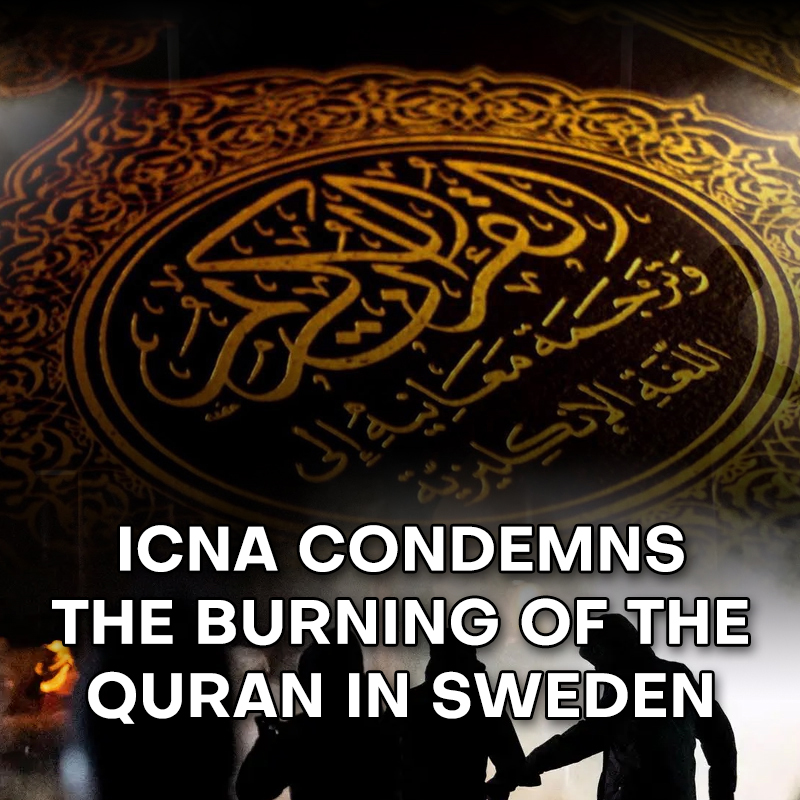
ICNA Condemns the Burning of The Quran in Sweden ICNA strongly condemns the burning of The Quran in front of a Masjid in Sweden on The Day of Eid-ul Adha. All this is happening under the guise of “freedom of speech”. In January of this year also, a Danish-Swedish man burnt a Quran in front of the Turkish embassy in Stockholm and that too was endorsed by the Swedish government. Such despicable act goes against the principles of respect, tolerance, and freedom of belief. Everyone should have the right to practice his or her religion peacefully. Such a vile act towards Islam’s most sacred text is deeply offensive and disrespectful to the beliefs and sentiments of over two billion Muslims worldwide. Insulting or demeaning other religions solely in the name of “free speech” is deeply hurtful, disrespectful, and can contribute to the discord in society. The west, time and again has proved that their support for freedom of speech is “selective”. Where on one hand they allow and support hateful acts like this one to happen while on the other hand they do not allow oppressed individuals and communities to raise their voice against the barbarism they face in countries like Palestine and Kashmir. While individuals may have the legal right to express their opinions, it is crucial to exercise that right responsibly and with sensitivity towards the beliefs and feelings of others and governments must not condone when it is more of a hate speech than free speech. If it was the other way around, there would have been a big hue and cry. But just for the records, it is prohibited in Islam to use verbal insults to deities of other faiths let alone to burn their sacred texts. If any true Muslim were to have done that, the Muslim world would outrightly condemn it. The timing of the burning of Islam’s holy book, during the important Muslim holiday of Eid al-Adha, is a further insult to the entire Muslim World. This happened on the Day when the sacrifice of Prophet Abraham (peace be upon him) of his son Prophet Ismail (peace be upon him) is commemorated. ICNA hopes that we can learn from one another, rather than using this so-called “freedom of speech” as a justification for spreading hate, inciting violence, or perpetuating discrimination. While the door of repentance is always open, the aggressor should know that such an act, Allah Almighty says in 9:63: “Do they not know that whoever opposes Allah and His Messenger will be in the Fire of Hell forever? That is the ultimate disgrace.”
Statement of Condemnation on the attack on Maryam Khan
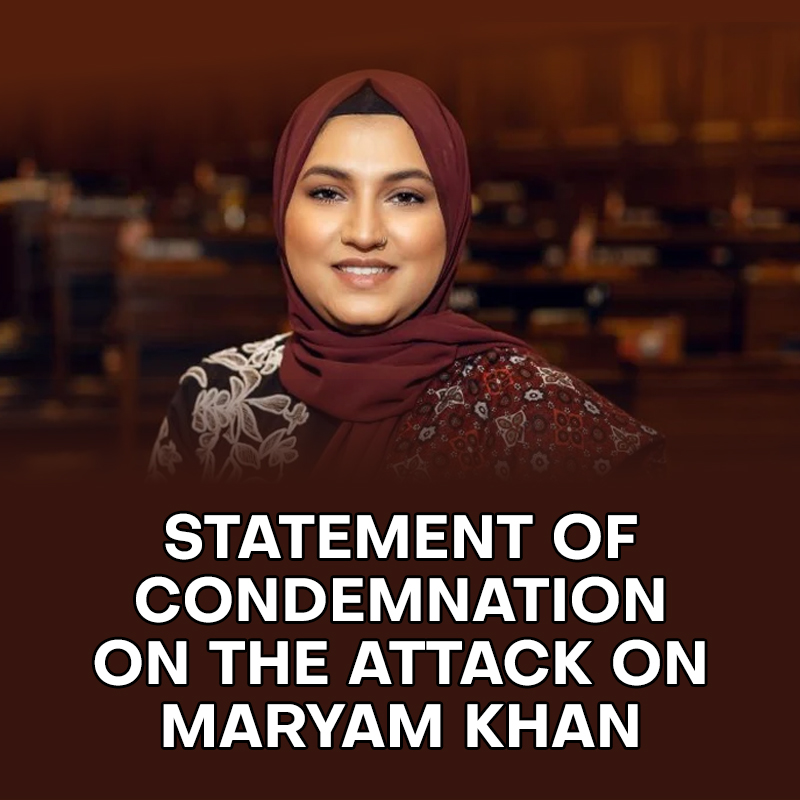
Statement of Condemnation on the attack on Maryam Khan Islamic Circle of North America – ICNA strongly condemns the recent attack on State Representative Maryam Khan in Connecticut just after the Eid-ul Adha prayer, Wednesday June 28th, 2023. Maryam Khan, was elected in a special election in 2022 to represent the state’s 5th District, becoming the first Muslim member and the first Muslim woman to the Connecticut House. For such a great achievement, Ms. Khan received a special award by Islamic Circle of North America- ICNA at its Annual National Convention. Maryam Khan has dedicated her time and efforts towards serving and working for the betterment of her community. As such, it is deeply distressing to witness an elected representative being subjected to harm simply for her religious beliefs and practices. This act of violence is not only a direct assault on Ms. Khan as an elected official, but also an attack on religious freedom and the principles of tolerance and coexistence that we cherish as a society. The attack on her, as a Muslim woman and especially after a prayer service, is deeply distressing and goes against the values of respect, understanding, and religious freedom that we hold dear as Americans. Sadly enough, her children had to witness this brutal attack. There is need for more security at such large gatherings and ICNA demands that a thorough investigation into this heinous crime be carried out. We expect nothing less than the full force of the law and maximum penalty be handed down to her attacker. Islamic Circle of North America -ICNA extends its thoughts, prayers, and solidarity to Lawmaker Maryam Khan and her family during this challenging period. May Allah SWT grant her immense rewards for her ordeals and bless her with a speedy and complete recovery.