



ICNA Reaffirms Commitment to Faith-Based Unity and Shared Humanity
*NEW YORK, NY (Feb. 1st, 2026) –* World Interfaith Harmony Week is an important opportunity to reaffirm our shared responsibility to promote peace, mutual respect, and cooperation among people of all faiths and beliefs. The Islamic Circle of North America (ICNA) proudly joins communities worldwide in advancing harmony as a foundation for a just and compassionate society. Islam calls upon humanity to embrace mutual understanding and respect. The Qur’an states: “ O mankind, indeed We created you from male and female and made you peoples and tribes that you may know one another. Indeed, the most honored of you in the sight of Allah is the most righteous of you ” (Qur’an 49:13). Guided by this principle, ICNA has long made interfaith engagement a central part of its mission. Across North America, ICNA has worked with diverse faith communities through interfaith dialogues, open mosque events, and joint service initiatives addressing hunger, disaster relief, social injustice, and the defense of religious freedom. These partnerships reflect ICNA’s belief that genuine harmony is built not only through dialogue, but through meaningful collaboration in service to the common good. The Prophet Muhammad (peace be upon him) taught, “The most beloved people to Allah are those who are most beneficial to people.” Inspired by this teaching, ICNA remains committed to working with all people of goodwill to reject hatred, build understanding, and strengthen the bonds that unite our communities. As World Interfaith Harmony Week is observed around the globe, ICNA reaffirms its dedication to cooperation, peace, and the dignity of all people, and calls on communities everywhere to continue building bridges of trust and compassion.
In Memory of Dr. Mazhar Kazi
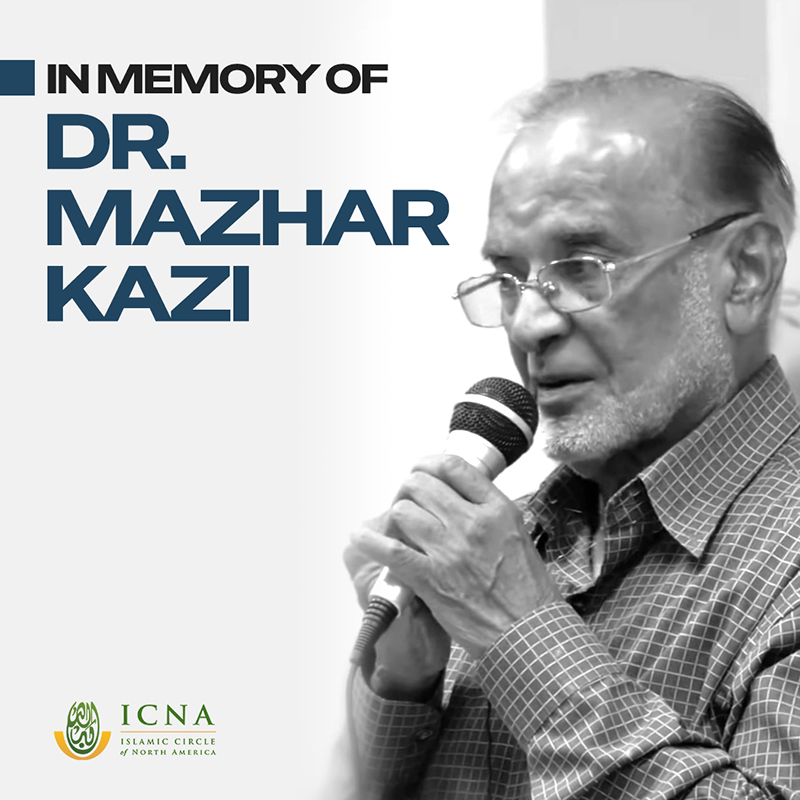
On November 23, 2025, our elder Dr. Mazhar Kazi passed away. We pray that Our Lord, the Most Merciful, envelops our beloved brother in His mercy and opens to him the doors of paradise. A pioneer in the American Muslim community, Dr. Kazi was among the first foreign-born Muslims to settle in Houston, and helped lay the earliest foundations of the community in the area. Among other contributions, he founded the first mosque in the Houston area and also helped organize the earliest Eid prayers. Dr. Kazi was a devoted, sincere leader and friend. He was continually dedicated to serving people and helping those around him and thus he leaves behind many who forever remember his kindness and friendship. Those blessed by his presence would find their hearts lifted with light-hearted comments even as they gained access to his sincere, thoughtful advice. In Houston, his kindness and attentiveness to others’ needs meant that he became a refuge for those facing a variety of problems. Those who had the opportunity to work closely with him in ICNA Houston recall his leadership and organizational excellence. Dr. Kazi’s focus meant that meetings began on time, discussions remained focused and productive, and—as he often hosted gatherings himself—that people would leave having eaten well. When differing opinions arose, he ensured that a sense of mutual respect prevailed. Among his many efforts, Dr. Kazi was particularly dedicated to supporting new Muslims. From 1990 to 2010, his sincere efforts (direct and indirect) resulted in countless people accepting Islam in Houston. And he also applied his personal time, effort, and resources towards helping these new Muslims after they joined the community. The ICNA Houston New Muslim Center—and particularly its dedicated women’s section—was one of the results of his devoted efforts. He arranged shelter, training, marriages, and support for many new Muslim sisters. For nearly three decades, Dr. Mazhar Kazi devoted his full attention to Islamic work, whether this came in the form of speeches, writings, teaching, or community service. He dedicated his life to dawah, nurturing new Muslims, and serving the community with sincerity and loyalty. In addition to the many he helped as a leader and friend, he leaves behind the family he loved so dearly, including his wife, Alia Kazi, a respected presence in her own right in ICNA Houston and Dallas. May Allah grant them lasting comfort and protection. May Allah reward Dr. Mazhar Kazi for all his efforts, fill his grave with light, and enable us to follow his example in serving the community.
ICNA Council for Social Justice Mourns Passing of Imam Jamil Al‑Amin and Reaffirms Call for Justice
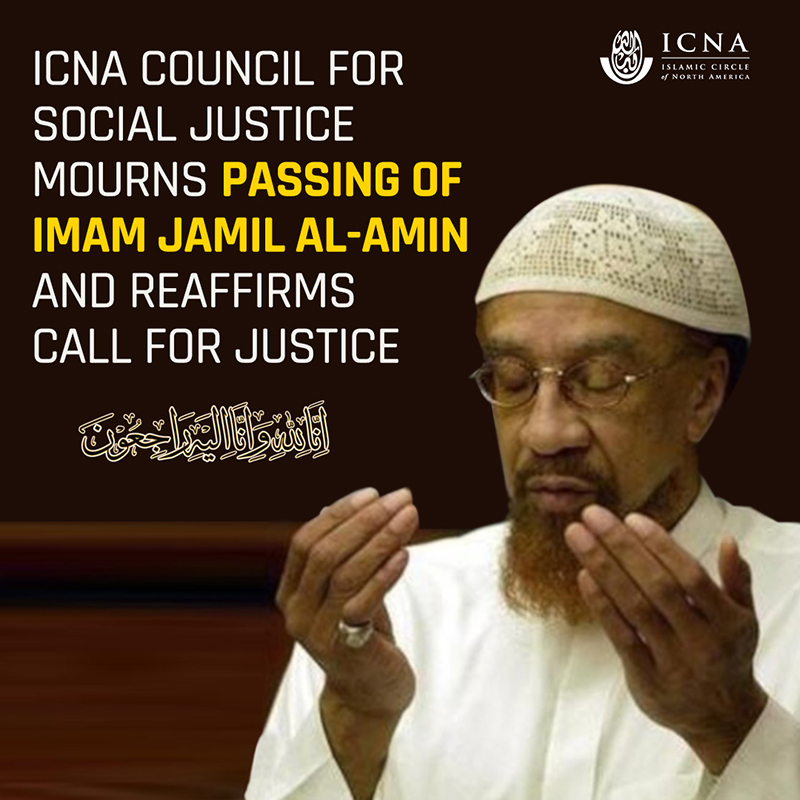
FOR IMMEDIATE RELEASE ICNA Council for Social Justice Mourns Passing of Imam Jamil Al‑Amin and Reaffirms Call for Justice The ICNA Council for Social Justice (ICNA CSJ), together with the Muslim Alliance for Black Lives (MABL), mourns the passing of Imam Jamil Abdullah Al‑Amin (formerly H. Rap Brown), who returned to his Lord on November 23, 2025, after decades of wrongful incarceration. We extend our deepest condolences to his wife, children, family, and Muslim community all who loved and were inspired by him. For more than six decades, Imam Jamil stood at the heart of the Black freedom struggle in America, from his early leadership in the Student Non‑Violent Coordinating Committee (SNCC) and his role as Minister of Justice of the Black Panther Party, to his transformative work as an imam in Atlanta’s West End. He helped build masajid, reduce crime, and revive a community through daʿwah, service, and principled organizing. ICNA CSJ has long affirmed that Imam Jamil was a political prisoner, targeted for his beliefs and community leadership rather than any crime. In August 1995, he was arrested in Atlanta on highly publicized shooting allegations; the alleged victim later stated he had been pressured to name Imam Jamil and admitted he never saw the shooter. Those charges were ultimately dropped. Years later, the same pattern of suspicion and overreach reappeared in the tragic events surrounding the shooting of two Fulton County deputies on March 16, 2000, for which Imam Jamil was convicted in 2002 and sentenced to life without parole. “We believe Imam Jamil’s conviction was a grave miscarriage of justice and part of a longer history of state repression against Black freedom fighters and Muslim leaders,” said Imam Khalid Griggs, ICNA CSJ. “His passing does not end our responsibility to seek truth, accountability, and restoration of his honor.” After his conviction, Imam Jamil was held for years in harsh federal facilities far from his family and community, including extended isolation and prolonged medical neglect. Even as his health deteriorated with serious illnesses, he remained a teacher, a source of strength, and a symbol of steadfastness for movements against racism, Islamophobia, and mass incarceration. ICNA CSJ and MABL honor Imam Jamil’s lifelong struggle for justice and renew our commitment to: -Support efforts to fully review and publicly disclose all evidence in his case; -Pursue posthumous measures to clear his name; -Stand with other political prisoners and victims of wrongful convictions, especially Black and Muslim prisoners. Inna lillāhi wa inna ilayhi rājiʿūn (From Allah we Belong and to Allah we shall return). May Allah grant Imam Jamil the highest ranks of Jannah, forgive his shortcomings, and reward his family for their immense patience and sacrifice. Media Contact: Imam Khalid Griggs ICNA Council for Social Justice
A Call for True Peace
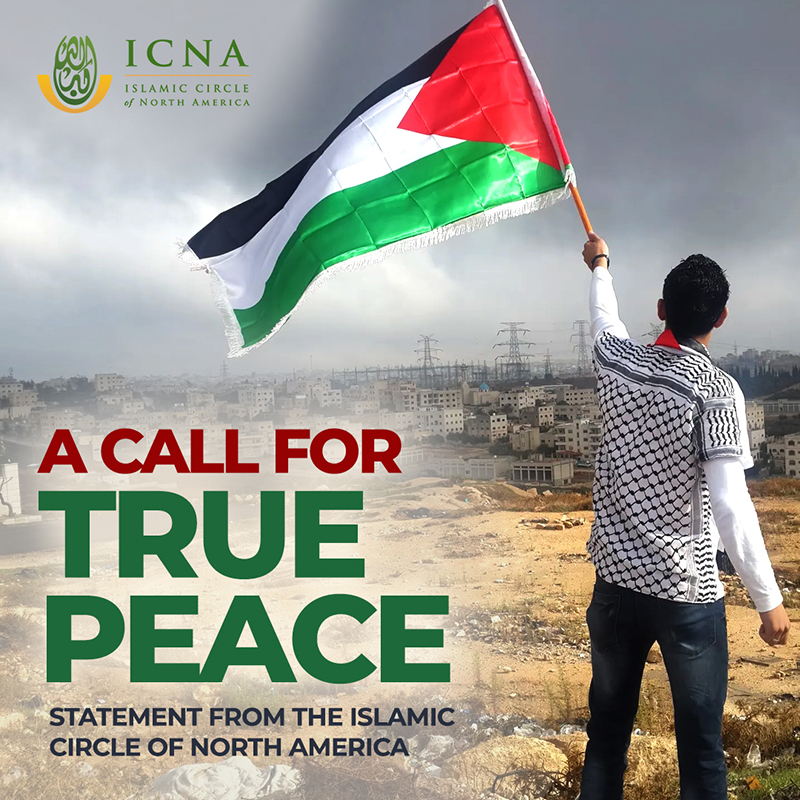
A Call for True Peace Statement from the Islamic Circle of North America The Islamic Circle of North America (ICNA) welcomes any genuine step toward bringing lasting peace to the people of Palestine. While the latest peace proposal offers a flicker of hope to those who have endured unimaginable suffering, the brutal killing of over 67,000 innocent civilians has laid bare the cruelty and moral bankruptcy of the ongoing oppression. We pray this effort paves a true path to justice, freedom, and dignity for every Palestinian. History, however, has taught us caution. Too many promises have been broken and truces shattered the moment the world’s attention shifts. A deep fear remains that once an initial phase is complete, Israeli leadership will revert to bombs and blockades. Should this fragile hope be betrayed, it would represent not merely a political failure, but a moral collapse in the eyes of the world. Therefore, we call on people of conscience everywhere: do not remain silent if this peace is violated. Stand with the oppressed. Speak for the voiceless. Demand that justice be honored, not delayed. True peace can only be achieved when the violence ends and mercy triumphs over might. A Call for True Peace Statement from the Islamic Circle of North America The Islamic Circle of North America (ICNA) welcomes any genuine step toward bringing lasting peace to the people of Palestine. While the latest peace proposal offers a flicker of hope to those who have endured unimaginable suffering, the brutal killing of over 67,000 innocent civilians has laid bare the cruelty and moral bankruptcy of the ongoing oppression. We pray this effort paves a true path to justice, freedom, and dignity for every Palestinian. History, however, has taught us caution. Too many promises have been broken and truces shattered the moment the world’s attention shifts. A deep fear remains that once an initial phase is complete, Israeli leadership will revert to bombs and blockades. Should this fragile hope be betrayed, it would represent not merely a political failure, but a moral collapse in the eyes of the world. Therefore, we call on people of conscience everywhere: do not remain silent if this peace is violated. Stand with the oppressed. Speak for the voiceless. Demand that justice be honored, not delayed. True peace can only be achieved when the violence ends and mercy triumphs over might.
Biography Of Muhammad (peace be upon him) By A Non-Muslim
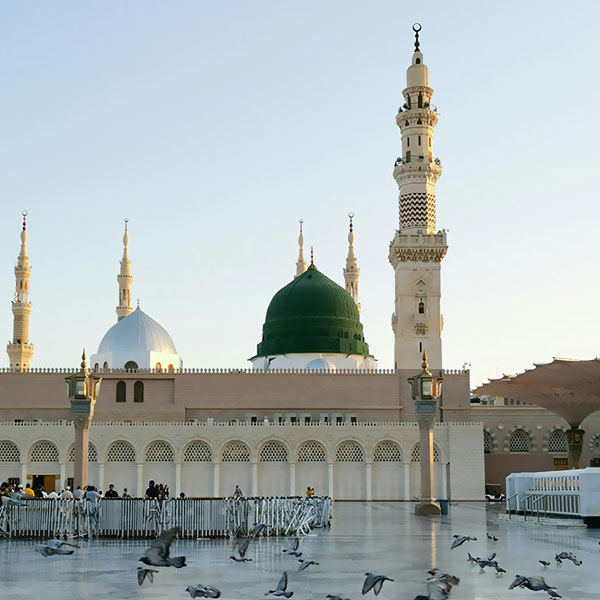
By: Prof. K. S. Ramakrishna Rao Head of the Dept. of Philosophy, Govt. College for Women. University of Mysore, Mandya-571401 (Karnataka, India). Re-printed from “Islam and Modern age”, Hydrabad, March 1978. Mohammad: The Visionary Mind That Transformed Arabia In the desert of Arabia was Mohammad born, according to Muslim historians, on April 20, 571. The name means highly praised. He is to me the greatest mind among all the sons of Arabia. He means so much more than all the poets and kings that preceded him in that impenetrable desert of red sand. When he appeared Arabia was a desert — a nothing. Out of nothing a new world was fashioned by the mighty spirit of Mohammad — a new life, a new culture, a new civilization, a new kingdom which extended from Morocco to Indies and influenced the thought and life of three continents — Asia, Africa and Europe. Mohammad’s Impact and Beyond When I thought of writing on Mohammad the prophet, I was a bit hesitant because it was to write about a religion I do not profess and it is a delicate matter to do so for there are many persons professing various religions and belonging to diverse school of thought and denominations even in same religion. Though it is sometimes, claimed that religion is entirely personal yet it can not be gain-said that it has a tendency to envelop the whole universe seen as well unseen. It somehow permeates something or other our hearts, our souls, our minds their conscious as well as subconscious and unconscious levels too. The problem assumes overwhelming importance when there is a deep conviction that our past, present and future all hang by the soft delicate, tender silked cord. If we further happen to be highly sensitive, the center of gravity is very likely to be always in a state of extreme tension. Looked at from this point of view, the less said about other religion the better. Let our religions be deeply hidden and embedded in the resistance of our innermost hearts fortified by unbroken seals on our lips. But there is another aspect of this problem. Man lives in society. Our lives are bound with the lives of others willingly or unwillingly, directly or indirectly. We eat the food grown in the same soil, drink water, from the same the same spring and breathe the same air. Even while staunchly holding our own views, it would be helpful, if we try to adjust ourselves to our surroundings, if we also know to some extent, how the mind our neighbor moves and what the main springs of his actions are. From this angle of vision it is highly desirable that one should try to know all religions of the world, in the proper sprit, to promote mutual understanding and better appreciation of our neighborhood, immediate and remote. Further, our thoughts are not scattered as appear to be on the surface. They have got themselves crystallized around a few nuclei in the form of great world religions and living faiths that guide and motivate the lives of millions that inhabit this earth of ours. It is our duty, in one sense if we have the ideal of ever becoming a citizen of the world before us, to make a little attempt to know the great religions and system of philosophy that have ruled mankind. Debunking Misrepresentation In spite of these preliminary remarks, the ground in these field of religion, where there is often a conflict between intellect and emotion is so slippery that one is constantly reminded of fools that rush in where angels fear to tread. It is also not so complex from another point of view. The subject of my writing is about the tenets of a religion which is historic and its prophet who is also a historic personality. Even a hostile critic like Sir William Muir speaking about the holy Quran says that. “There is probably in the world no other book which has remained twelve centuries with so pure text.” I may also add Prophet Mohammad is also a historic personality, every event of whose life has been most carefully recorded and even the minutest details preserved intact for the posterity. His life and works are not wrapped in mystery. My work today is further lightened because those days are fast disappearing when Islam was highly misrepresented by some of its critics for reasons political and otherwise. Prof. Bevan writes in Cambridge Medieval History, “Those account of Mohammad and Islam which were published in Europe before the beginning of 19th century are now to be regarded as literary curiosities.” My problem is to write this monograph is easier because we are now generally not fed on this kind of history and much time need be spent on pointing out our misrepresentation of Islam. Redefining Warfare and Uniting Humanity Through Self-Defense The theory of Islam and Sword for instance is not heard now frequently in any quarter worth the name. The principle of Islam that there is no compulsion in religion is well known. Gibbon, a historian of world repute says, “A pernicious tenet has been imputed to Mohammadans, the duty of extirpating all the religions by sword.” This charge based on ignorance and bigotry, says the eminent historian, is refuted by Quran, by history of Musalman conquerors and by their public and legal toleration of Christian worship. The great success of Mohammad’s life had been effected by sheer moral force, without a stroke of sword. But in pure self-defense, after repeated efforts of conciliation had utterly failed, circumstances dragged him into the battlefield. But the prophet of Islam changed the whole strategy of the battlefield. The total number of casualties in all the wars that took place during his lifetime when the whole Arabian Peninsula came under his banner, does not exceed a few hundreds in all. But even on the battlefield he taught the Arab barbarians to pray, to pray not individually, but in
YMj Institute 3 Years Program for Middle School Students

We are pleased to announce that registration is now open for the third semester at YMJ Institute, an online educational platform dedicated to nurturing middle school students through comprehensive Islamic education. At YMJ Institute, we are committed to shaping the next generation of ethical and responsible leaders—young individuals grounded in strong Islamic values, moral character, and spiritual awareness. Our curriculum is thoughtfully designed to inspire students to grow intellectually and spiritually, while fostering a deep connection to their faith. Semester Highlights: • Tailored Islamic studies for middle school students• Interactive online classes led by experienced educators• Focus on character development, ethics, and spirituality To register your child, please refer to the attached flyer or use the following link:Register for the Third Semester Register Now We look forward to welcoming your child into a vibrant learning community that empowers them to thrive both academically and spiritually.
Time: Our Downfall or Our Success

“Time is money.” “Time is of the essence.” We hear phrases like these often, usually proclaimed to boost our productivity. Generally speaking, even across cultures and professions, nothing is more valuable than money, and the fact that money is equated with time speaks volumes about its importance. As Muslims, we believe Allah (SWT) created everything and what He creates is sacred and to be cherished. We treasure it, are grateful for it, and strive to use it wisely. Some things given to us are gifts, sources of joy with potential for success. Time is one such gift, without which nothing is possible. The more time given, the more opportunities for good we have. However, Allah (SWT) will ask how we used that gift and will judge us accordingly. Indeed, accountability is a hallmark of our faith. Everything He creates is sacred “Indeed, the number of months with Allah is twelve (lunar) months in the register of Allah [from] the day He created the heavens and the earth; of these, four are sacred. That is the correct religion, so do not wrong yourselves during them.” (Quran 9:36) Allah’s (SWT) emphasis on certain months suggests we should be extra mindful of our religious obligations during those times and aim to increase our worship and good deeds in hopes their rewards will be magnified. This teaches us there is purpose and an obligation in how we pass our time. This purpose is clearly stated throughout the Quran and hadith of Prophet Muhammad (peace be upon him). For example, Allah (SWT) said: “I have only created jinns and men that they may serve Me. No sustenance do I require of them, nor do I require that they should feed Me. For Allah is He Who gives (all) sustenance, Lord of Power, steadfast forever.” (Quran 51:56-58) With this, it becomes our duty to fill our time by serving Allah (STW). We can do this in various ways, including service to humanity, to ourselves, and to our families. A gift to be grateful for and used wisely In Islam and in life, gratefulness is touted as a balm, both for the soul and for the practicalities of everyday life. Allah (SWT) said: “Be grateful to Allah for whoso is grateful is grateful for the good of his own soul.” (Quran 31:12). Here we are told to thank Allah (SWT) for all He has given us is out of His mercy, as we can do nothing alone. As mentioned, gratitude benefits our soul, a claim backed by scientists who study human psychology. “Expressing gratitude and cultivating it in ourselves has been linked to increased happiness, improved physical health, greater mental well-being, higher self-esteem, and life satisfaction.” (Gene P., Benefits of Gratitude, www.happierhuman.com) What’s more, Prophet Muhammad (peace be upon him) said: “The two blessings that many people waste are health and free time.” (Bukhari). Allah (SWT) reminds us many times that we tend to forget time’s value and that it is our nature to waste it, underscoring how important it is to make good use of it. Perhaps the greatest reminder is Surah Al-’Asr, which addresses time in title and context. “By time, indeed, mankind is in loss, except for those who have believed and done righteous deeds and advised each other to truth and advised each other to patience.” (Quran 103) From this we understand we will be the losers in this life unless we use time wisely and for good, as the surah suggests. Take accountability – you will be asked about it Prophet Muhammad (peace be upon him) said: “Take advantage of five matters before five other matters: your youth before you become old; your health before you fall sick; your wealth before you become poor; your free time before you become preoccupied, and your life before your death.” (Musnad Imam Ahmad) Other hadiths urge us to be mindful of how we spend our time and remind us of standing before Allah (SWT) on judgment day. The Prophet (peace be upon him) said: “A person will not move on (on the day of judgment) until he has been asked about four things: his life and in what he spent it; his knowledge and what he did with it; his wealth, from where he acquired it and on what he spent it, and his body and how he wore it out.” (Mu’ath bin Jabal) As we can see, time is a heavy gift that carries an even heavier responsibility. Practice urgency in doing good Allah (SWT) says: “Every soul will taste death.” (Quran 3:185) There should be an urgency in how we plan and execute use of our time, and procrastination should be off the table for believers. Imagine you have a long list of important tasks set aside for a future date, only to be afflicted with something that prevents you from completing them. “Lose no time to do good deeds before you are caught up by one of seven calamities awaiting you: a starvation which may impair your wisdom; a prosperity which may mislead you; an ailment which may damage your health; an old age which may harm your senses; a sudden death; the Dajjal (Antichrist), or doomsday, which is indeed the hardest and most bitter.” (At-Tirmidhi) Tips for your time Time is valuable and needs to be used wisely. As Muslims, we believe every action can become worship if done for betterment and with good intention. So, purify your intentions before you act, no matter how mundane the tasks. Be organized and create to-do lists to ensure your busy schedule doesn’t cause you to forget. Take accountability of yourself, so if a change is needed you have time to shift. There are hadith mentioning the early part of the day holds bounty in the daylight, in energy levels and so much more. Muhammad (peace be upon him) said: “O Allah, bless my nation in their early morning.” (Tirmidhi) What’s more, to perform optimally we must feel optimal, so eat well and guard your rest. Also, never forget the power of prayer, which calms our psyches and garners
Strength Through Character: Why the Prophet Muhammad (peace be upon him) is Important to All of Mankind

How the Prophet Muhammad’s (peace be upon him) Character Changed the World Many of the problems facing people in today’s world can be traced to a lack of adherence to moral values. From murder to embezzlement, the number and size of criminal activities have increased exponentially in the last five decades. One needs only to turn on the local evening news to become aware of the general anxiety and lack of peace in the world. More than 1400 years ago, however, a single man was able to not only cure the Arabian Peninsula of its vices, but also instill in the people a sense of compassion towards their fellow man. Today’s world and that of the Prophet’s could not be more different, yet the problems and solutions are somewhat the same. What causes seemingly content people to disobey the unwritten rules of society? And what are some possible solutions commensurate with the problem? This essay discusses the character of the Prophet Muhammad (peace be upon him), and examines how the values he held and practiced gave him the strength to influence the world around him. The Prophet Muhammad (peace be upon him): A Model for Kindness and Compassion By 600 C.E., the Arabian Peninsula was a hotbed of moral vices. As Sheikh Safiur-Rahman Al Mubarakpuri notes in The Sealed Nectar, a biography of Prophet Muhammad (peace be upon him), regarding Pre-Islamic Arabia, “prostitution and indecency were rampant and in full operation.” Men and women could openly commit acts of fornication and adultery without fear of societal consequences. The only issue at the time that was of perhaps greater concern was the fragility of tribal relationships. These tribes were legendary throughout the Old World for the manner in which they held generations-long grudges. Except during prohibited months, fighting was common and much bloodshed occurred. In less than a century, however, the Prophet Muhammad (peace be upon him) would reform Arabian society and his message transformed entire populations from Damascus to Ethiopia. [Read more: Muslims around the World] The Prophet Muhammad, peace be upon him, taught love, kindness and compassion to his people, and was seen to be the most loving, kind, and compassionate of all of them. The Quran mentions his kind and gentle behavior in these words: “O Messenger of Allah! It is a great Mercy of God that you are gentle and kind towards them; for, had you been harsh and hard-hearted, they would all have broken away from you” (Quran 3:159). Muhammad’s (peace be upon him) Honesty The exact characteristics that allowed the Prophet (peace be upon him) to do this are innumerable. Nonetheless, chief among his traits was his honesty. The range of names attributed to him includes Al-Sadiq (the Truthful) and Al-Amin (the Faithful). Even his enemies, who were diametrically opposed to everything he preached, still referred to him by these names. In effect, the Prophet Muhammad (peace be upon him) was defined through his honesty. The first example of his honesty lies in his conditions of borrowing and lending. Most significantly, the Prophet (on the orders of God) eliminated charging interest; no longer was the borrower forced to borrow money on outrageous terms that had previously condemned him to a life of servitude to the lender. A testament to the severity of not returning borrowed possessions and trusts lies in the Prophet’s (peace be upon him) Farewell Address. He reminds the people to be faithful and return whatever has been entrusted to them to its rightful owner. Muhammad’s (peace be upon him) Treatment of Women The character of the Prophet (peace be upon him) was also seen in his treatment of women. In Pre-Islamic Arabia, women were treated as mere commodities. That is, they held no property rights, divorce rights lay in the hands of men and they were responsible for all household duties. The Prophet (peace be upon him), however, actively involved himself in household matters. He would help his wife with chores like sweeping the floor. According to author Fazl Ahmad in Muhammad: The Prophet of Islam, when one of his children would fall ill, the Prophet (peace be upon him) would stay by their bedside and actively take care of them. As ordered by God, the Prophet (peace be upon him) gave women in Islam the right to initiate divorce and to own their own property, among other liberties. It is important to note here the critics’ point of view: that Islam, rather than giving women rights, demotes them to a position of subservience to man. Notwithstanding, one needs only to carefully study the Quran, the holy book of Islam, and prophetic sayings to understand Islam’s treatment and emphasis on positive relations with women. [Find out about treatment of women in Islam.] The directives given were so different from what had been the norm in Pre-Islamic Arabia that even many of the Companions of the Prophet had reservations regarding taking their wives’ counsel for their affairs. Despite this initial reluctance, the belief in God and the example set forth by the Prophet (peace be upon him) eventually convinced the Companions to integrate this into their lifestyles. In effect, Islam had elevated women to a position on par with men, and the Prophet’s (peace be upon him) example reinforced Islam’s message of equality. Muhammad’s (peace be upon him) Goodwill The Prophet’s (peace be upon him) goodwill did not simply extend towards women or fellow Muslims. It was inclusive towards people of other religions as well, including the Jews and Christians of the time. An example of this lies in his treatment of prisoners of war during the battle of Badr. The prisoners were kept in extremely good living conditions and even fed proper food. Furthermore, they were given the option of freeing themselves by either paying a ransom or by teaching ten Muslims how to read and write. This environment stands in direct contrast to the appalling conditions most prisoners of war dealt with in the past and continue to deal with in the present,
With Hardship Comes Ease: Finding Peace Through the Quran

Hania H Life is unpredictable. No matter who we are, each of us will face hardships at some point—whether it’s the loss of someone we love, stress from responsibilities, or moments of failure that shake our confidence. These struggles often make us feel isolated from the people around us, as though no one can truly understand what we’re going through. However, there is a source of comfort and guidance that is always within reach: the Qur’an, the holy book of Islam. What makes the Qur’an remarkable? How can it help us find peace? Isn’t it simply just a book? The Quran is not just any book; it is a book that does not dismiss human pain or ask us to ignore it. Instead, it acknowledges the reality of our suffering and grief while showing us how to both face it and overcome it. God never asked us to bury our feelings; He told us over and over to turn to him, to ask him for peace, and to have faith in him that whatever he wills for us is what’s good for us. The Qur’an describes itself not only as guidance sent to mankind, but also as a source of healing. In one verse, it says: “And We send down in the Qur’an that which is healing and mercy for the believers.” (17:82) This verse elaborates on how God did not only send the Quran to guide, but also to heal. He created mankind, and who can know your heart better than the one who created it? Just as the body requires medicine when we are physically ill, the soul requires words of comfort. It requires us to feel the connection between ourselves and God to truly feel at peace. Reciting or reflecting on verses can ease anxiety, calm fears, and remind believers that they are never truly alone, no matter how much it seems like they are. Healing is not only about recovery from illness or physical pain; it also refers to the quiet healing of the heart—the kind that comes from knowing that pain has meaning, that relief is possible, and that God is always near. A Story of Patience & Faith One of the most powerful examples of resilience in the Qur’an is the story of Prophet Ayyub, known in the Bible as Job. His story is one of immense suffering—he lost his wealth, his health, and even his family. Yet, throughout his trials, he never lost his faith in God. He prayed day after day, week after week, month after month. He never lost hope in Allah, knowing that God was with him and knew what was best for him. The Qur’an describes his prayer: “Indeed adversity has touched me, and You are the most merciful of the merciful.” (21:83) In response, God restored his health and blessings. In fact, God gave him even better than what he had: “So We responded to him and removed what afflicted him of adversity, and We gave him back his family and the like thereof with them as mercy from Us and a reminder for the worshippers.” (21:84) This story illustrates one of the key tools the Qur’an tells us to use when we are hurting or struggling: patience. In Islam, patience is not passive endurance. It is an active form of resilience—choosing to remain steadfast and hopeful even when life feels unbearable. God mentions those who are patient multiple times in the Quran, saying, “Indeed God is with the patient”. Ayyub did not pretend he was unaffected by his suffering; instead, he turned to God honestly with his grief. His example teaches Muslims that hardship is not meant to silence us, but to bring us closer to the Divine. Having Hope Through Hardship Although at first glance Islam doesn’t seem related to mental health in any way, it is very connected to it. God constantly reassures us in the Quran that we will make mistakes, and we will struggle…but we will also find peace. We will find mercy if we ask for forgiveness, we will find safety when we ask for protection, and we will find a path when we ask for guidance. One of the most repeated assurances in the Qur’an comes in a short chapter called Surah Inshirah (The Relief). It states: “For indeed, with hardship [will be] ease. Indeed, with hardship [will be] ease.” (94:5–6) Notice how the phrase is repeated twice. In Islamic tradition, repetition signals emphasis. When this verse is repeated two times, it emphasizes that no matter how tough it feels, God will make it easy. With every single hardship you face, big or small, God is for sure going to send you ease. It is as though God is saying directly: Your pain will not last forever; with every hardship comes a path to ease. This verse has become a mantra for Muslims navigating grief, depression, or uncertainty. It shifts the perspective from despair to hope, reminding them that struggle and relief are intertwined. Another theme woven throughout the Qur’an is God’s closeness to those who are struggling. For Muslims, this nearness is not symbolic—it is deeply personal. In one verse, God says: “When My servants ask you about Me, indeed I am near. I respond to the call of the caller when they call upon Me.” (2:186) This is one of the most comforting promises in the Qur’an: the idea that your calls do not vanish into silence. Every whispered hope, every cry in the dark, is heard by God. Indeed, He is with you, no matter where you are and what you face. You are never alone because God never leaves you. When you call to him, rest assured, God(who is the All Hearing and All seeing) is listening to you. The Qur’an states: “O believers! Seek comfort in patience and prayer. Allah (God) is truly with those who are patient.” (2:153) This verse provides both a method and a reassurance. The technique is patience—practices that give structure and