



Images From Seerah’s Album
Milestones Now, look at the second picture from this section. This is the early period of the Da’wah. So far, only a few people have pledged their submission to the Prophet ﷺ Mountains of hardship have fallen on them, some of them are laid down on burning sand under the weight of a heavy stone; some others are tied with ropes and chains and dragged about in the streets. There are still others who are laid on red embers of the fire. One of these oppressed people is Khabbab bin Al-Aratt (رض) He was forcibly laid on red embers to the point that the fat from his back melted and extinguished them. He presents himself before the Prophet ﷺ. He draws the picture further in the following words: “We complained to Allah’s Messenger ﷺ about our state while he was leaning against his sheet cloak in the shade of the Ka’bah. We said, ‘Will you ask Allah to help us? Will you invoke Allah for us?’ He said, Among those who were before you a (believer) used to be seized and a pit used to be dug for him and then he used to be placed in it. Then a saw used to be brought and put on his head, which would be split into two halves. His flesh might be combed with iron combs and removed from his bones, yet, all that did not cause him to revert from his religion. By Allah! This religion (Islam) will be completed (and triumph) till a rider (traveler) goes from Sana (the capital of Yemen) to Hadramout fearing nobody except Allah and the wolf, lest it should trouble his sheep, but you are impatient” — Sahih al-Bukhari You can see the milestones of your religious struggle with open eyes. First, the worship of the one and only God; secondly, the establishment of a society where no one is wronged, where the strong will be weak if they usurp the rights of others or oppress them, and the weak will be strong if their rights are taken unjustly, or they are oppressed. If only a goat dies of hunger in a far-flung area, it will make the ruler tremble out of a deep sense of accountability. Every Prophet gave the same advice to his people: Worship the one and only God! It was also revealed: We have already sent Our messengers with clear proof and sent down with them the Book and the balance that the people may maintain [their affairs] in justice — (Al-Hadid 57:25). The establishment of a just order through jihad and political power has been considered as helping Allah and his Messenger. Jihad is the physical struggle in the path of Allah. It can range from fighting a battle for Islamic justice to speaking out against oppression. And We sent down iron, wherein is great military might and benefits for the people, and so that Allah may make evident those who support Him and His messengers unseen — (Al-Hadid 57:25). Life Conditional on Worship On the way from Mecca to Medina, there is a small town called Badr. Here the road turns off the shores of the Red Sea and winds toward Medina. At a short distance, small hills surround a valley and sandy fields. ‘This is the second year after the immigration (Hijrah), and an incident will take place in this valley that will change the course of humanity from an alley of death to the highway of life. On one side are gathered all the prominent and influential leaders from that great center of ignorance, Mecca. On the other side, is a force comprising those who have responded to the call to God. They have joined the Prophet for 15 years. They include the best of Mecca and those who have responded to his call from Medina. On the side of falsehood and disbelief stands an army of 1,000 men with no shortage of horses and swords. On the side of truth and justice is a small group of slightly more than 300 believers with only two horses and a minimal number of blades. Sad bin Mu’adh (رض) has erected a booth on one of the small hills. The Messenger of Allah ﷺ sits under its shade with his cave friend, Abu Bakr Siddique. At night, the followers of the Prophet ﷺ enjoy a sound and refreshing sleep, a sign of divine favor, for it was Allah who covered them with slumber to give their minds and bodies extra rest. Nevertheless, the Prophet ﷺ spent the whole night in prayer and dua (supplication). He stands before the Lord who has sent him with duties of Messengership. At times he puts his forehead on the ground. It was a strange scene. The fate of Tawheed — the concept of the oneness of God — had depended upon only a few lives. The Prophet ﷺ was overwhelmed with a feeling of lowliness. He stretched forth his hands and said, “O Allah, accomplish for me what You have promised to me. O Allah, bring about what You have promised to me. O Allah, if this small group of Muslims is destroyed, You will not be worshipped on this earth.” (Sahih Muslim). Allah sustains Islam in this world by protecting the believers who worship Him. For this reason, the Prophet ﷺ pleaded to Allah in the final moments leading up to the Battle of Badr, giving the observation that “if this small group of Muslims is destroyed, You (Allah) will not be worshipped on this earth.” In other words, if Allah granted victory to the Muslims, then they and their descendants would be faithfully devoted to calling humanity to Allah, the one and only Lord of mankind. The Prophet’s dua was an expression of a request, want, and promise; it was a mission statement, too. The Prophet ﷺ didn’t say the destruction of the Muslim Ummah would cause civilization to perish, factories to vanish, science and technology to die, and
Supreme Court Ruling Harms the Homeless

In the United States, the homeless crisis continues to worsen. While the U.S. sends billions of dollars to other nations for military purposes and other aid, millions of Americans face the risk of homelessness or are already homeless. Housing advocates, legislators, and even the president have all recognized that the housing supply is insufficient and that the number of people in need of assistance has reached unprecedented levels. In states such as California, Washington, and Oregon, the housing crisis is a constant concern, partly due to laws that limit the policing of the homeless. With limited action from local officials to move individuals off the streets, these states have historically been areas where those facing housing insecurity seek refuge. However, this situation is changing. On June 28, 2024, the Supreme Court issued a ruling that negatively impacts the homeless. In the case of City of Grants Pass v. Johnson, the Court determined that laws related to camping on public property do not violate the Eighth Amendment. The case involved three ordinances enacted in Grants Pass, Oregon, a city with a population of 38,000 where an estimated 600 people were living on the streets. To address the homeless crisis, the city introduced ordinances that prohibited “sleeping on public sidewalks, streets, or alleys; camping on public property; and camping and overnight parking in city parks.” Violations of these ordinances result in escalating penalties that could ultimately result in criminal prosecution and jail time. In a class action lawsuit, two unhoused plaintiffs challenged the city of Grants Pass in U.S. District Court, arguing that the ordinances violate the Eighth Amendment’s prohibition against cruel and unusual punishment. Their case referenced two important precedents: Robinson v. California (1962): This Supreme Court decision found that a California law criminalizing narcotics addiction violated the Eighth Amendment because it punished individuals for their “status” rather than their actions. Martin v. City of Boise (2019): This Ninth Circuit Court case, which relied on Robinson, ruled that a Boise ordinance prohibiting camping on city streets and public places constituted cruel and unusual punishment. The ruling emphasized that ordinances cannot penalize unhoused individuals for acts they are compelled to commit due to a lack of available shelter space. Involuntarily Homeless In the Grants Pass suit, the plaintiffs argued that the lack of shelter openings made them “involuntarily” homeless, thereby forcing them to violate city ordinances due to the unavailability of shelter options. Although the District Court initially ruled in favor of the plaintiffs, ordering the city to cease enforcing the ordinances, the Supreme Court reversed this decision. The Supreme Court’s ruling was based on an interpretation of the Eighth Amendment’s “cruel and unusual punishment.” The Court found that the Eighth Amendment regulates the type of punishment a locality can impose but does not address whether certain actions should be punishable. The Court rejected the plaintiffs’ reliance on Robinson, stating that the Grants Pass ordinances did not punish individuals based on “mere status” but rather on their actions. They concluded that it does not matter whether an individual is homeless — the law applies to anyone found sleeping or camping in public places. Furthermore, the Court determined that the penalties imposed by the Oregon ordinances, including fines and jail time, did not constitute punishment designed to cause “terror, pain, or disgrace,” which are prohibited by the Eighth Amendment. Fines and jail time are standard forms of punishment throughout the U.S. for various criminal offenses. The Court also raised practical concerns, criticizing the Martin ruling as an “experiment” that was unworkable. They noted the challenges city officials would face in determining when someone is “involuntarily” homeless or has been denied shelter. The Court’s Real-life Consequences The Supreme Court’s decision has significant real-life consequences. Going forward, localities considering laws aimed at curbing homelessness through police sweeps will face less judicial resistance. Housing advocates will have fewer opportunities to challenge such laws, as the decision now limits only the type of punishment rather than the circumstances. Essentially, the Court’s ruling allows those who become homeless due to economic and racial realities to be criminalized. As a housing attorney, I have observed that this decision is already causing harm. In California cities, sweeps have increased, and those forced to dismantle their tents often receive no compensation for their belongings that get discarded in the process. The most vulnerable members of our communities are disproportionately affected. As Muslims, we are called to support those in need through acts of charity, zakat, and sadaqah. It is crucial that we back local organizations with donations to increase housing and protection for those unable to secure shelter for themselves.
1 Million Backpack
ICNA Relief’s Back2School Program As the school year approaches, many families face financial stress. The cost of school supplies and uniforms can be overwhelming, especially for low-income families. With the 2023 federal poverty level for a family of four at $30,000, lingering pandemic effects, high unemployment rates, and over 30 million students in free and reduced meal programs, countless parents struggle to provide essential school supplies. This lack of resources can hinder students’ confidence and success in school. Recognizing this challenge, ICNA Relief has made it their mission to empower students and strengthen communities through their annual Back2School Program. A Milestone Achievement This year marks a significant milestone for ICNA Relief, as the organization surpasses the distribution of 1 millionth backpack since the inception of the Back2School Program in 2008. What began as a small local effort has evolved into a nationwide campaign, providing backpacks filled with school supplies to children in need. Restoring Dignity The Back2School Program is about more than just distributing backpacks. It’s about restoring dignity and confidence to children as they begin the school year. Each backpack symbolizes an investment in a child’s future, showing them that their education matters. Community-Driven Success The success of ICNA Relief’s Back2School Program is built on the power of community collaboration. Partnering with local mosques, schools, businesses, and nonprofits, the initiative mobilizes thousands of volunteers who work tirelessly to ensure that children receive their supplies in time for the first day of school. Empowering the Next Generation ICNA Relief believes that education is key to breaking the cycle of poverty. By providing children with the necessary tools for success, the Back2School Program empowers the next generation and strengthens communities nationwide Version 2 As we approach the new school year, we must recognize the financial strain many families face. For low-income families, the cost of school supplies and uniforms can be overwhelming, especially with the lingering effects of the pandemic, high unemployment rates, and over 30 million students in free and reduced meal programs. Many parents struggle to provide essential school supplies, which can impact their children’s confidence and success in school. ICNA Relief has taken on the vital mission of empowering students and communities through its annual Back2School Program. This year marks a significant achievement for ICNA Relief, as the organization has surpassed the distribution of 1 million backpacks since the inception of the Back2School Program over 15 years ago. What started as a small local effort has grown into a nationwide campaign, providing backpacks filled with school supplies to children in need. The Back2School Program is about more than just distributing backpacks. It’s about restoring dignity and confidence to children as they begin the school year. Each backpack represents an investment in a child’s future, showing them that their education matters. The success of ICNA Relief’s Back2School Program relies on the power of community collaboration. By partnering with local mosques, schools, businesses, and nonprofits, the initiative mobilizes thousands of volunteers who work tirelessly to ensure that children receive their supplies in time for the first day of school. ICNA Relief believes that education is key to breaking the cycle of poverty. By providing children with the necessary tools for success, the Back2School Program empowers the next generation and strengthens communities nationwide🎒✨ Check out our recent school supply and backpack giveaway featured on WGN TV. https://icna.org/wp-content/uploads/2024/08/WhatsApp-Video-2024-08-29-at-8.45.12-PM.mp4
What if your loved ones oppose your conversion?
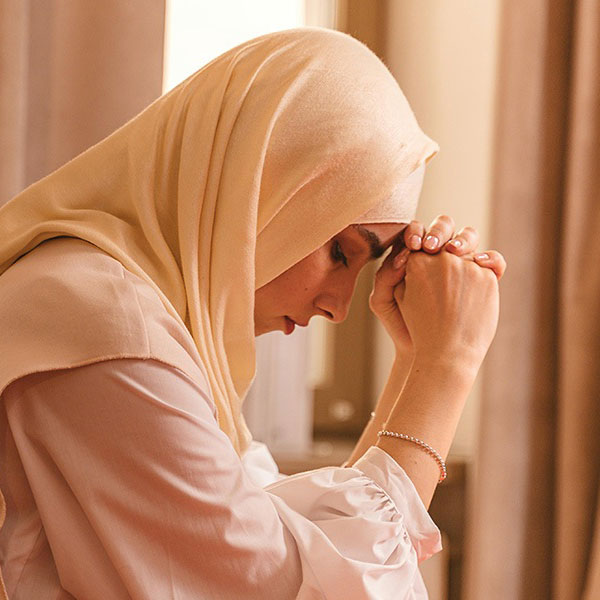
Laura El Alam When people first embrace Islam, they are often filled with energy, optimism, and positivity. The joy of connecting with their Creator and discovering His plan for humanity makes them feel like they have a new lease on life. When they share their new mindset and lifestyle with their loved ones, they might experience a variety of reactions. In the best case scenario, their friends and family are willing to listen, learn, and support them on their journey. Sadly, that is not always the case. Some new Muslims face opposition, hostility, and rejection. They are ostracized by their family or abandoned by their friends. What should you do if your loved ones reject you because you became a Muslim? 1. Try not to be too worried if their initial reaction is negative. People’s hearts can soften over time. If someone responds in a way that is unsupportive, challenging, or upsetting, you should remind yourself that it might just take a while–months, or even years– for their feelings to settle. Some people find change to be extremely hard to cope with, but over time, many can adapt and broaden their outlook. 2. Don’t try to convince them of Islam by debating, arguing, or attacking their religion. You might feel like you now understand the Truth and you want to share it with them. However, pressure tactics usually backfire. Instead, focus on showing the beauty of Islam through your actions. Be as kind, gentle, and helpful as you can. This will teach them about Islam more than any lecture could, and it will also reassure them that the “new you” is positive, wholesome, and more loveable than ever. 3. Decide who is worth your efforts. In Islam, maintaining family ties is extremely important. If the people who are opposing your conversion are your parents, siblings, or other close family members, you should make a sincere effort to preserve your relationship with them, and God will reward you for any patience you display. On the other hand, if a friend, colleague, neighbor, or acquaintance rejects you because you chose to become a Muslim, you might want to consider whether this person really deserves to be a part of your life. A worthy person will try to understand your point of view, support you, and want the best for you. So, if someone outside of your close family refuses to respect your new lifestyle, then they are probably not deserving of your emotional energy. Save your efforts for the people who truly matter. 4. Once you have determined that someone is worth your effort and energy, you will need to summon up a lot of patience. If they are unhappy with your conversion, they will likely question your beliefs and possibly even debate or argue with you. One helpful thing to remind them (and yourself) is that each and every one of us is in charge of our own soul. Our primary responsibility is to our personal connection with God, and other people’s approval and opinions do not matter in the crucial decision of Whom to worship. We can still love and respect our family without letting their negativity affect our core beliefs. We can also choose not to debate or argue, especially if the other party is not listening to our point of view. 5. Understand that a variety of emotions might lie behind negative reactions. What looks like anger is often a manifestation of different feelings: fear (of losing you, or of stereotypes they have about Muslims), anxiety (about how their life and/or your relationship might change now that you are a Muslim), sadness, or even insecurity. It’s quite possible that they aren’t aware of their true feelings, or they don’t know how to identify – much less verbalize – their feeling of “I love you and I don’t want to lose you.” If someone is lashing out when you tell them about your decision to embrace Islam, you can say something like, “I can see this is hard for you to accept right now. Just know that I love you and I intend to keep being a good daughter/sister/friend to you. Someday I hope you will find a way to support me because I am happy with my choice, and my dedication to Islam is making me a better person.” 6. Recharge your battery with supportive people. All the negativity can be draining and might even take a toll on your iman (state of heart, or spiritual health). Make sure to spend time with Muslims who teach and inspire you. If possible, join a class for converts to learn more about your faith, make friends, and find sympathetic listeners. If you find that certain people in your life are so toxic that they are making you doubt Islam, then take a break from those people. Nothing is more important than your faith, and you must guard it carefully.
Advice to The Women Struggling to Find a Spouse

In a previous article, I presented the accounts of a number of Muslim women who are seeking a spouse. They encountered many obstacles in their search, as these women were quite determined to find a prospective husband who practices Islam in a sincere and determined way. What strategies have they tried? In their quest to find their soul mate, single women pursue various avenues, both traditional and modern. The following accounts have been shared with me by two women. Their names have been changed for privacy reasons. Lina says, “I have told friends and family I am looking for someone, but no one seems to know anyone they could introduce me to. I have tried two different matchmakers — one of them was ridiculously expensive and thought she had the right to tell me I was too fussy if I didn’t want to meet someone, since she didn’t actually take the time to ask me what I was looking for or take my deal breakers into account when picking someone for me to meet.” “I have also tried in-person events,” she continues. “The ones that are like speed dating are awful and I stay away from those because you can’t have meaningful conversations with anyone that way. There are lots to choose from these days, so it takes some trial and error to find the type of event that works for you.” Aminah says she has tried to find a spouse “by word of mouth (through family and friends), Muslim marriage/dating apps, Muslim social events, Muslim marriage events, WhatsApp groups, and mosque matrimonial services.” Not all have been very helpful. “The apps are geared towards making you pay for subscriptions and keeping you on there as a member for as long as possible,” she says, “and I did not meet anyone through a WhatsApp group or Muslim marriage event.” Some women question — Why get married at all? If the husband search is so stressful, and high-quality Muslim men are apparently so hard to find — why do women persevere? “I want a companion to experience life with,” says Lina. “There is only so much I want to do on my own or with friends. There are experiences and goals I want to achieve with my husband, like going for hajj with them. I want to have children of my own which is a very big thing I would like to do in my life. It is from the sunnah to get married, and there are blessings that become open to you only when you are married. I want to experience this.” Aminah says, “It is the only way we as Muslims can experience physical affection and intimacy, have children, and build a family. I want to get married to safeguard myself from haram, for emotional support and companionship. I also want my bloodline to continue and for my offspring to love and worship Allah (SWT) and follow the sunnah of the Prophet (peace be upon him) until the day of qiyamah [resurrection], as a means of sadaqah jaariyah [ongoing charity] for me after I die.” “It is quite a solitary, lonely life without a partner,” Aminah explains. “In Muslim culture and society, there is a real obsession with marriage, and women who are not married past a certain age are not respected.” Aminah believes her age is the main thing holding her back. “I started the marriage search when I was twenty-nine, not having family support in my search. I let people waste my time, and it was difficult to find someone of similar age, educational background, professional status, halal/haram ratio. The majority of men my age (along with their families) are looking for a wife much younger.” “As a divorcee,” says Lina, “I am clear on what I am looking for and what my deal breakers are. I am not prepared to get married for the sake of being married if it means sacrificing my peace or putting my imaan [faith] at risk. Some may say I’m picky, but I believe I have standards which I enforce so I don’t go through what I have endured in the past. I also need someone who can be patient and understanding with me, as I still have some triggers from my past marriage that come up when I discuss marriage and past experiences with potential husbands.” Advice for women seeking to marry Is there anything women can do to avoid heartache and disappointment in their search for a husband? Although they have not yet found their own soulmates, Aminah and Lina have learned some important lessons along the way. They offer this advice to fellow single Muslimahs: “I would encourage women to have their wali [guardian, protector] involved straight away, as there is wisdom in this, and it is a protection,” says Lina. “Don’t be afraid to ask as many questions as possible and as soon as possible. Don’t meet anyone until you have a list of your needs, wants, and deal breakers. DO NOT COMPROMISE YOUR NEEDS OR DEAL BREAKERS. Make sure your values and future goals are similar. Know your love language, personality type, and attachment type. Find out theirs and consider this in your decision.” “Don’t be afraid to have disagreements when getting to know someone,” adds Lina, “as it will show you their conflict resolution style and whether they have the humility to apologize. While being able to communicate well is paramount, it becomes more important if they can continue this during disagreements. Pay attention to how they make you feel in good and difficult interactions. Trust this instinct. You may have to sit with this emotion and figure out why you feel this way, as it may have to do more with you than them.” “Always consult others and have them meet a potential man BEFORE you decide if it will progress,” continues Lina. “Others can often see traits/red flags/good characteristics that you do not see and give you food for thought or the confidence to proceed. Consider
Bangladesh’s Student Protests Topple an Oppressive Regime
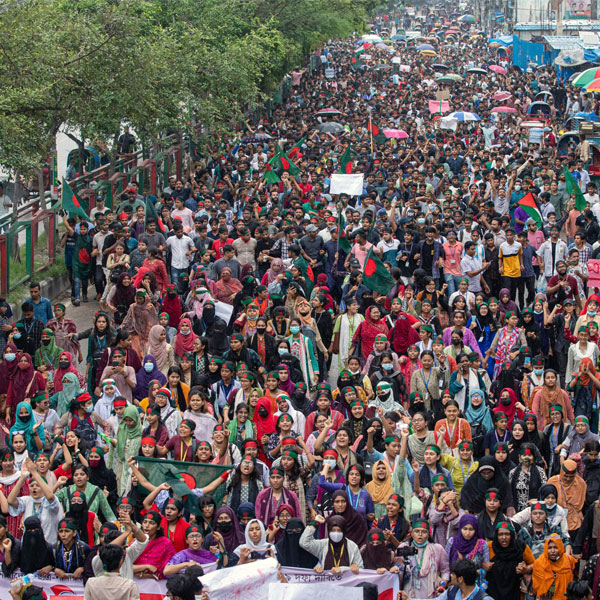
In late summer, students across universities in Bangladesh hosted various demonstrations, protesting a revival of a quota system where descendants of the fighters of Bangladesh’s liberation in 1971 would be awarded with government jobs. This accounts for around 30% of government jobs. At the time of the protests, there were 18 million unemployed young people in Bangladesh. Students formed a countrywide movement to protest for reform of the quota system, coined “Students Against Discrimination.” What started as peaceful protests quickly turned deadly, with Bangladeshi police killing a student coordinator, Abu Sayed. The video of Sayed’s killing sparked even more protests, with thousands of students pouring into the streets. Protesters were sparked further by the way the government refused to meet any demands. Sheikh Hasina, Bangladesh’s prime minister, ruling for over 15 years, called protesters “Razakar,” which is an offensive term used for collaborators. Protests turned more violent when police started attacking more and more student protesters in Dhaka. The government then shut down universities and cut off the internet. According to Al Jazeera, at least 187 people were killed, and 1,000 were arrested between July 10 and July 20. On July 18, it was reported that the internet in Bangladesh was cut off by authorities. The next day, armed forces fired at large crowds of protesters. After the days of violent response to protests, the Supreme Court on July 21 decreased the 30% quota to 5%, and reserved a 2% quota for ethnic minorities. The rest of 93% of civil jobs will be decided on merit. However, protests continued because a curfew was still imposed on universities, internet was not fully restored, and the arrest and killings of student demonstrators were too violent. Protesters renewed their demands, which then included the release of protest leaders, lifting of curfews, and reopening of universities. An estimated 300 protesters died at the hands of the government. BBC reports that around 32 children died during the demonstrations. A mass protest in Dhaka’s central square eventually forced Hasina to resign and flee the country, ending her 15-year rule. After Hasina’s escape, the Bangladeshi president released several prisoners charged under false circumstances, that were imprisoned by Hasina’s orders and under her direction, among them her opposition leader. Though her long-standing rule was unpopular for many reasons over the years, it was the violence against students which finally led to the collapse of her rule. Students could not bear the injustices perpetrated against their friends and community members.
Coming to Islam: Maurice Hayes
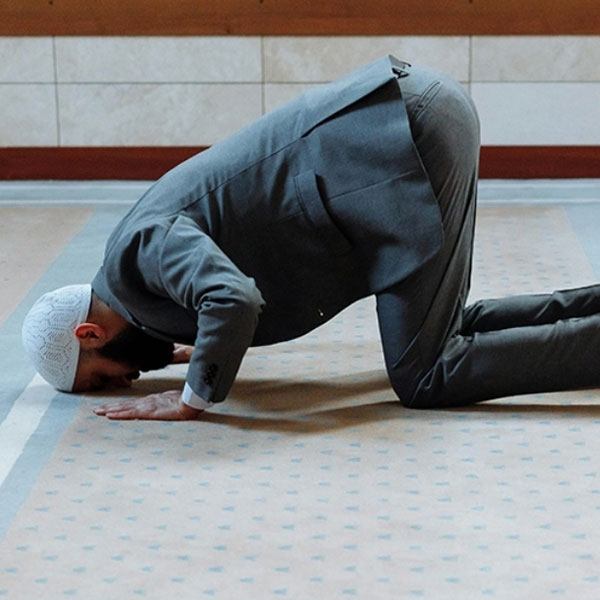
Habeeba Husain A young Christian man never thought the Muslim friend he played basketball with in his twenties would re-enter his life nearly fifteen years later as his brother in Islam. “I was praying for him, and I felt like at the same time, he was praying for me,” said Maurice Hayes, 39, of New Jersey who converted to Islam this past Ramadan. Although he grew up in a religious Christian family, Hayes’ level of practice see-sawed throughout his life. His parents were both very much involved with their local church, but he described himself as a backsliding Christian, a person who is not fully practicing and moving away from God as a result. But when he entered his late twenties, Hayes decided to go all-in to his religion. “I know the Bible almost like the back of my hand,” Hayes said. “I could empathize with people based upon their struggles, and I could resonate with them on this level…Jesus said this, Paul said this…I could put a message together.” Diving so deep into learning the Bible made Hayes almost too knowledgeable in the subject. He was able to argue from both sides. He found holes, things that just didn’t add up in the text. “There were too many contradictions within the book for me to just go forth and practice,” Hayes said. Additionally, Hayes took issue with other Christian preachers that used the “you’re going to Hell” approach. He quoted Matthew 7:21-23, “Not everyone who says to me ‘Lord, Lord,’ will enter the kingdom of heaven.” With this clearly mentioned in the scripture, Hayes would question the preachers, “So how do you know that you’re going to make it?” The inconsistencies within the scripture and this popular approach to preaching Christianity pushed Hayes into agnosticism. “I knew there was a creator, but I couldn’t figure out who it was,” Hayes said. For over a decade, Hayes lived a secular lifestyle all the while knowing God was out there. His Christian roots taught him to seek God’s help and fast when facing a difficulty, and he continued to practice this from time to time throughout his life even as an agnostic. When Hayes distanced himself from Christian practice, his relationship with his family members soured. He didn’t agree with their methods of practice of the Christian faith that, in his view, contradicted the Bible. Things like putting up a Christmas tree or drinking alcohol made no sense to him, and thus, he was fine living a secular lifestyle—he wasn’t looking for a replacement religion. However, this mindset shifted in October of 2023. All over his social media timelines, Hayes saw the gruesome images coming out of the Gaza strip. For months, his eyes and ears unwillingly became witness to Israel’s atrocities against the Palestinian civilians. It was these people who reminded Hayes of someone very familiar to him. “I’m seeing people worshiping, in spite of all the suffering,” Hayes said. “If there’s any example of what Jesus was like—suffering and still praising God, crucified and still praising—this. This is it.” People across the world have seen the photos and videos from the Gaza strip, things like entire neighborhoods destroyed in the background of a sole survivor holding his decapitated dead or a father mourning while carrying his child’s lifeless body. But despite the unimaginable images, the world—including Hayes—heard the Palestinian people still say, “Alhamdulillah,” or “All praise is due to Allah,” illustrating their immense trust in God’s decree and firm belief of better days to come in Heaven. In his own life, Hayes said he has troubles. From his family to his business, he felt things were falling apart. But observing the steadfastness of the Palestinian people opened his eyes. “I can’t feel bad for my situation, because they’re suffering one thousand times more than I am—and they’re still worshiping God,” Hayes said. Then he decided, “Let me look into their faith.” As Hayes began to research Islam, he came across videos and articles that debated and pointed out the same flaws he saw in the Bible. He realized he wasn’t alone in his thinking, and in fact, there were millions who felt the same way. The more he learned about Islam, the more he filled the gaps left by his former faith. “I love the fact that the Quran is preserved. I love the fact that I can speak about it with full confidence, whereas I would have doubts before [with the Bible],” Hayes said, referencing the idea that the holy book of Islam has remained unchanged, protected by God. Since the time of the Prophet Muhammad (may the peace and blessings of God be upon him), people have been memorizing the Quran and passing it down to subsequent generations both through an oral and written tradition. This past Ramadan, Hayes privately took his shahada, the Islamic testimony of faith in which a person declares, “There is no god but Allah, and the Prophet Muhammad (may the blessings and peace of God be upon him) is His final messenger.” This entered him into the fold of Islam. He was officially a Muslim, just like his friend from a decade and a half prior. Hayes wanted to reconnect with his Muslim basketball buddy, but didn’t even have his current phone number. He logged onto LinkedIn, took a deep breath, and sent a direct message to share his good news. His friend of course shared in his joy of this new chapter and volunteered to drive him to a local mosque to declare his faith publicly and meet the greater Muslim community. “I had to thank him,” Hayes said. “I [told him], ‘I know you were praying for me. I was praying for you to become a Christian. I know you were probably praying for me to become a Muslim. I owe this to you.” With his newfound faith—his gift from God—Hayes cannot help but feel a deep sense of gratitude. Gratitude for guidance from Allah’s Quran, gratitude for the friendship all those years ago
The Burden of Interest: Why Islam Prohibits Usury

In the United States, debt has become an inescapable part of life for millions. As of 2024, American consumers owe a staggering $1 trillion in credit card debt alone, with average household balances exceeding $7,000. Student loan debt has surpassed $1.7 trillion, affecting over 43 million borrowers. Mortgages, auto loans, and personal loans add hundreds of billions more to the nation’s debt burden. Behind much of this debt lies a common thread: interest. Interest, the cost of borrowing money, has become so ingrained in our financial system that many view it as an unavoidable reality. Yet, Islam questions this assumption and takes a firm stance against interest in all its forms. The Concept of Riba in Islamic Law To understand why Islam prohibits interest, we must first delve into the concept of “riba” in Islamic law. Riba, often translated as “usury” or “interest,” is considered a major sin in Islam. The Quran, Islam’s holy book, contains several verses condemning riba in the strongest terms. One such verse states, “O you who have believed, do not consume riba, doubled and multiplied, but fear Allah that you may be successful” (Quran 3:130). The prohibition of riba in Islam stems from several fundamental principles. First and foremost is the concept of social and economical justice. Islam views the charging of interest as an exploitative practice that widens the gap between the rich and the poor. When a lender charges interest, they are guaranteed a return regardless of the borrower’s circumstances or the success of their venture. This transfer of risk from the lender to the borrower is seen as unjust, particularly when it leads to a cycle of debt that can trap individuals and families in financial hardship. Moreover, Islamic economics emphasizes the importance of risk-sharing in financial transactions. The ideal Islamic economic system encourages partnerships where both parties share in the profits and losses of a venture. This approach is believed to foster a more equitable distribution of wealth and promote economic stability. Interest-based lending, on the other hand, is seen as divorcing money from real economic activity and encouraging speculative behavior. Principles Underlying the Prohibition of Interest Another key argument against interest in Islamic thought is that it represents “money making money.” In Islamic economics, money is viewed as a medium of exchange, not a commodity in itself. The idea that money should increase in value simply by being lent out is considered unnatural and harmful to the economy. Instead, Islam encourages the investment of capital in productive enterprises that create real value and contribute to societal well-being. The prohibition of interest also relates to the Islamic concept of wealth as a trust from God. In this view, all wealth ultimately belongs to God, and humans are merely stewards entrusted with its management. Charging interest is seen as an abuse of this trust, as it allows the wealthy to increase their riches without effort or risk, often at the expense of those in need. Critics might argue that without interest, there would be no incentive for people to lend money or save. However, Islamic finance has developed alternative models that aim to achieve similar economic functions without resorting to interest. These include profit-sharing arrangements (mudarabah), partnerships (musharakah), and cost-plus financing (murabaha), the details of this arrangements are beyond the scope of this article. Islamic banks also offer savings accounts that provide returns based on the bank’s profits rather than a predetermined interest rate. It’s worth noting that the Islamic prohibition on interest extends beyond personal loans to encompass all forms of interest-based transactions, including government bonds and corporate debt. This comprehensive approach reflects the belief that the harmful effects of interest permeate all levels of the economy. Challenges and Implications in the Modern World The Islamic stance on interest has gained attention beyond the Muslim world in recent years, particularly in the wake of financial crises that have highlighted the instabilities in the global financial system. Some economists, both Muslim and non-Muslim, have argued that interest-based lending contributed to these crises by encouraging excessive debt and speculative behavior. However, implementing an interest-free economy in the modern world presents significant challenges. The global financial system is deeply intertwined with interest-based instruments, and many argue that abandoning interest entirely would be impractical or even harmful to economic growth. Nonetheless, the growth of Islamic finance in recent decades demonstrates that alternative models are possible and can coexist with conventional finance. For many Muslims, avoiding interest is not just an economic decision but a matter of faith and ethics. This can present challenges in navigating the modern financial landscape, particularly in non-Muslim majority countries where interest-free options may be limited. Some Muslims choose to avoid debt entirely, while others seek out Islamic financial products or make use of interest-free lending circles within their communities. The Islamic prohibition of interest also raises broader questions about the nature of money and finance in our society. It challenges us to consider whether our current financial system truly serves the needs of all members of society or whether it perpetuates inequality and instability. While a complete overhaul of the global financial system is unlikely, the principles underlying the Islamic stance on interest may offer valuable insights for reforming and improving our economic practices. Ultimately, the Islamic prohibition of interest is rooted in principles of social justice, risk-sharing, and the nature of money and wealth. While it stands in stark contrast to the interest-based system that dominates global finance today, it offers an alternative perspective on economic relations that prioritizes equity and social welfare. As Americans grapple with the burden of debt and interest, the Islamic approach to finance provides food for thought on how we might create a more just and stable economic system for all.
Reflections on Muharram and Ashura
Reflections on Muharram and Ashura As we welcome the new Islamic year we should take time to reflect on ourselves and how we can make this year better than the last. Learning about the virtues of Muharram and Ashura can help us understand how we can start off strong and set ourselves up for a successful year ahead. Muharram marks the beginning of the Islamic calendar and is said to be the most virtuous of the 4 sacred months. The word ‘Muharram’ itself means ‘the honored and sacred one.’ It is the only month attributed to the name of Allah as The Messenger of Allah saw said, “The best month for observing fasting after Ramadan is the month of Allah, Muharram, and the best salah after the prescribed salah is the salah at night.” (Muslim) The significant day of Ashura also lies in the month of Muharram which is one of the reasons that makes it the most virtuous of the sacred months. Ashura is the tenth day of Muharram and fasting on this day pre-dates back to pre-islamic era. When the Prophet Muhammad saw arrived at Madinah the Jews were observing the fast of Ashura and they said this is the day when Musa became victorious over Firaun. On that the Prophet (saw) said to his companions, “You have more right to celebrate Musa’s victory than they have, so observe the fast on this day.” (Bukhari) Fasting the day of Ashura was made obligatory in the first year of hijrah and voluntary in the second year after the revelation of the month of Ramadan. The Prophet Muhammad (saw) encouraged fasting on the 10th of Muharram and intended to also fast on the 9th as a way to distinguish Muslims from the disbelievers. It is said, “The fasting of the day of Ashura will expiate the previous years’ sins.” (Ibn majah) Many events of the past related to the victory of God illustrate the significance of this day as well. This includes the parting of the Sea for Musa AS to escape the tyranny of Firaun, the landing of Nuh AS ship on mount Judi escaping the ridicule of his people. Later Husayn RA was martyred at Karbala on this day escaping the oppression of unjust governance. Ashura in essence highlights the importance of justice in Islam. This year Ashura might be more important and relevant than ever before as we have been witnessing the unbearable oppression of our brothers and sisters in Palestine. We see Ashura in a new light as almost a celebration of resistance to oppression and anticipated victory of God. If we are blessed with the opportunity to observe the fast of ashura this year, let’s pray for forgiveness, justice and the victory that has been promised to the believers.