



A Housing Crisis: What Are the Solutions?

For the last four years, I’ve been working as an attorney in the housing sector in California. I have worked directly with tenants at risk of being evicted; and I have also worked on the policy side with those fighting for legislative change at the local, state, and federal level. On both fronts, I have witnessed the massive failure of our government to preserve and increase affordable housing. Housing is a basic essential need and therefore should be a right of all U.S. citizens. In a 2022 report, the authors state, “Federal law does not yet recognize a right to housing, in the Constitution or via legislation. The United States Constitution only protects civil and political rights such as freedom of speech and trial by jury. It does not recognize social and economic rights, such as food or housing. Federal housing legislation grants the government discretion to assist persons in need, but it does not go as far as recognizing a general right to housing. This leaves federal agencies under no specific obligation to uphold housing rights.” As an attorney working in the housing sector, I witnessed firsthand how a lack of security in housing can send people into a downward spiral impacting their mental health and their ability to find or keep a job. Why is that? Because if you do not have a safe and comfortable place to eat and sleep at night, it becomes harder to maintain a routine and preserve stability in your mind, body, and soul. This is why shelter is at the base level of the pyramid set out by Maslow’s hierarchy of needs. When I worked as an eviction-defense attorney at a Legal Aid in Northern California serving low-income communities, I witnessed how easy it was for families to end up living on the streets. Sometimes the root cause was divorce that left a single mom to have to work part-time while being the sole care-giver for her young children. Other times it was an injury that forced an elderly person out of the work force and into massive credit card debt, leaving them unable to pay their rent. There were so many instances when a little bit of misfortune or misdirection had a domino effect and caused people to be at risk of losing everything. Now, as I work on the policy side, fighting for reform at the local and state level, I have learned how the government, both at the state and federal levels, is ill-equipped to help our most vulnerable individuals and families stay housed or get housed. I have also learned about ways that we can forge ahead to find positive and long-lasting solutions. Current State of Affairs Two years ago, I wrote an article about homelessness in the aftermath of the 2020 covid-19 crisis. At that time, there were lingering protections in place to keep tenants who had been impacted by the pandemic housed. Since then, the housing crisis has worsened. The number of homeless persons has been increasing due to rising inflation and out-of-reach rents. There is research that rising rent costs lead to an increase in homelessness of both individuals and families The numbers show a rise in homelessness among Hispanics and Blacks. Nearly 40% of the unhoused were Black and a quarter were seniors. Those numbers do not take into account individuals who are at risk of being homeless – those sleeping on their friend’s or family member’s couch or who live with multiple families in one house. It has traditionally been thought that homelessness is a problem in big cities like Los Angeles, New York, and D.C, but it has spread to historically more affordable parts of the country. Texas, Ohio, and Arizona are just a few of the states with a reported growth in unsheltered populations due to rising local housing costs. Harvard’s Joint Center for Housing Studies found that roughly 653,000 people reported homelessness in January of 2023. That figure was a 12 percent increase from the same time a year prior. Harvard researchers report that as the largest single-year increase in the country’s unhoused population on record. Possible Solutions: A Fork in the Road States like California have attempted to use a coordinated effort of state and federal funds to improve shelter options. Programs like Homekey and Project Roomkey have helped tens of thousands of Californians stay off the streets. While these programs have shown positive effects for vulnerable communities, it is not enough. It has proven to be only a band-aid approach to solving the housing crisis. Because billions of federal pandemic relief funds have expired for California, and the $97.5 billion surplus from 2022 has dried up, there is now a “funding cliff.” Without new avenues for funding, the California housing crisis may slip backwards rather than move towards achieving its goals. Lawmakers and housing policy analysts say that there is a fork in the road: one way is to innovate and dedicate ongoing funding to development of affordable housing; the second way is to continue to make ad hoc investments that are nothing more than band-aid fixes to a massive problem. The first option addresses homelessness as an ongoing challenge that compels hands-on creative solutions, coupled with reforms to justice, health, and the foster care systems. There must be a willingness to consider radical change like “social housing,” a European term that refers to “government-owned or regulated affordable housing,” in practice in Vienna and Singapore as two prime examples. Social housing was popular in the U.S. in the 1930s during the Great Depression. It was a mixed-income type of housing sponsored by tenant and labor unions. Last year, California passed SB555, the first state “social housing” legislation in the U.S., which requires the state “to produce a study and recommendations on expanding the state’s social housing sector.” Social housing tackles the housing crisis by removing the development of housing from only the hands of for-profit entities. It prioritizes setting rent prices at rates that individuals and families can practically afford. By re-tooling and re-investing in housing models like community land trusts and public housing,
The Land of the House of Allah, Where Fragrance Is Felt
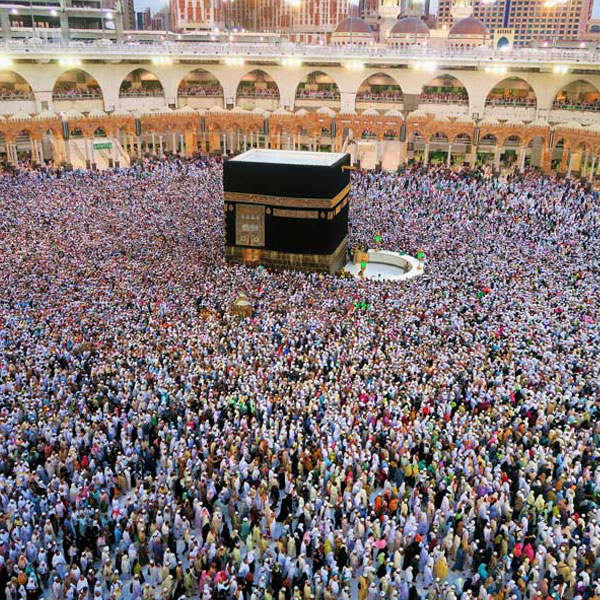
It is said you can never know what it feels like until you experience it for yourself. No number of words nor detailed descriptions can adequately portray the encounter. Likewise, no pictures, as professional and emotionally moving as they may be, can do justice to the actual human spectacle and religious landscape as witnessed by the eye. Nothing captures the literal likeness of what your senses feel, and it is said that the feeling is like no other. Every culture and era has written poignant poetry and transcribed hymns down generations, attempting to visualize a snapshot of what it is to visit this land. Could it be anything other than this? For this land is most beloved to Him, Azza wa Jal (Mighty and Majestic) whom we love more than any other — it holds Baytu Allah, the House of Allah, for whom we would lay down our lives. Rasool Allah (sallallahu ‘alayhi wa sallam), the man whom we love more than ourselves and everything we hold dear, shed blessed tears of longing for the land when he looked towards it, even after having been persecuted there. There is no city dearer to Allah and to Rasool Allah than this city. How could it be anything less than magnificent to us, His servants? The splendid sacredness of the land of the House of Allah transcends our earthly attempts at praise and honor. It is so blessed, that the fragrance can be felt even from afar, yes felt, not just smelled. And all the senses weave together and heighten one another here, so your heart may skip a beat or your eye may shed a tear, just from a trace of the aroma. The mesmerizing chant of the adhan (call to prayer) reverberates through hills and mountains, through the bustling markets and grand hotel lobbies, and through the chambers of your heart and soul. You don’t just hear it; you feel its profound meaning, and you are motivated to establish salah and hurry to do so. You long to hear it between salah times, and that longing begins to ache when you leave the land. You then realize that this is the essence of prayer: This is actually how salah is to be established and treated. It should make us ponder deeply — do our rushed few minutes spent on salah, in between stressful meetings, performed while we’re out of breath because the time is almost gone, with our buzzing cell phones in our pockets, do justice to this most essential form of worship in the lives of Muslims? Does it have the effect it should on us and our lives when performed in that way? And yet, the Prophet told us, “The first action for which a servant of Allah will be held accountable on the Day of Resurrection will be his prayers…” (al-Tirmidhi). The city is so honorable that even glorifying it becomes an act of worship. The honor one gives it, and the sincerity in performing the rites and rituals within it, are tied to the level of piety in one’s heart. Could anything else explain how and why there is a consistent circling around the magnificent cube, the House of Allah, as if it were the heartbeat of the ummah, past, present and future. In the constant bustling Tawaf, the encircling round and round, how is it that one feels utter peace, and even with multitudes of other souls circling around with you, you feel completely alone with Him. It is as if you are the only one there. Why else would so many, more than two million souls last year, travel from across all the corners of the earth, leaving behind their lives, work, and families, some with great financial or health difficulty, to perform religious rituals and be a guest in His House? The pull to travel to this land and perform the rituals — the desire of each and every Muslim to do so— has not diminished in 1400-plus years and never will. It is miraculous that nothing in the past one and half millennia lessened this great, burning desire of every single Muslim from every corner of every continent to glorify this city. He SWT has made glorifying this city one of the most honorable acts of worship, one by which a person draws close to Him. He says: “…And whoever honors the symbols of Allah — indeed, it is from the piety of hearts” (Qur’an 22:32). There exists a piece of heaven in this land, an actual piece of the place we all dream about. The Black Stone is from that place we all aspire to ultimately attain through worship, goodness, and du’a. “A piece of heaven” is an endearing term used to evoke feelings of one’s intense love for a place, time, or object. This literally has it, the Black Stone given to Prophet Ibrahim, alaihi salam, from Jannah (Paradise). There is a rush to be in its presence more than any other spot in this Masjid al-Haram. The circumambulating intensifies at the corner where The Black Stone is set in the Ka’aba. There the prayers heighten in yearning. Makkah, this land of the House of Allah, is the birthplace of the most beloved man throughout all history, the most revered and the most followed, the most studied and the one for whom we all, every one of the 1.8 billion of us, make durood (salutations) multiple times a day, every day. The one to whom we send peace and blessings upon every single time we hear his name. This city is the place where “the world’s most influential person” was raised. It neighbors the other beloved city, Madinah, the one which accepted our beloved in its comforting borders when he was emigrating there, away from persecution in Makkah. He came to love the city so much that whenever he approached it he would spur his horse to a gallop because of his love for the city (Bukhari). It holds the most revered spot after the Ka’aba: our beloved’s home and
Interview with a Prison Chaplain for Muslims Behind Bars

An Interview with Devalle Muhammad- Social Service Coordinator and Prison Outreach Chaplain for the Muslim Community of Knoxville, TN Tell us a little bit about yourself My name is Devalle Muhammad, and I live in Knoxville Tennessee. I am the Social Service Coordinator and Prison Outreach Chaplain for the Muslim Community of Knoxville (MCK). Having spent time within the State’s penal system I am intimately aware of the trials and tribulations Muslims must endure while incarcerated. As a result, we here at the MCK are in our second full year of being perhaps the only outside community within the State of Tennessee with a consistent program of volunteer chaplains conducting weekly Jumu’ah Khutbahs, Ta’alims and Eid commemorations in three separate State-run facilities. Alhamdulillah. We are looking to expand our reach through regional cooperation with other outside communities throughout this State in shā Allah. In doing so we can build on the active Dawah model established and reach more Muslim brothers and sisters in this condition. Providing spiritual upliftment, sound Deeni instruction, and preparation for eventual reintegration into society on sound Islamic footing. What is the state of US prisons today? With the highest incarceration rate in the world prisons across this country continue to face challenges with overcrowding, inadequate healthcare, staffing shortages, and a myriad of issues related to racial disparities and systemic injustices within the criminal justice system. Efforts towards reform are ongoing, with initiatives focused on reducing rates of incarceration, implementing rehabilitation programs, addressing root causes of crime, and introducing reentry services. What are the difficulties in fasting, praying, and observing religious holidays in prison? The problems faced are consistent throughout the U.S. penal system. Fasting presents the dilemma of serving suhoor and iftar provisions on time. Moreover, the foods provided for these meals-when they are served-are lacking adequate nutritional value forcing Muslims to rely on either carbohydrate-laden commissary items they must purchase themselves or run the risk of disciplinary action for stowing away food items from the dinner halls. All these efforts attempt to have provisions for evening or pre-dawn meals. Insofar as prayer is concerned, finding suitable space within the confines of a prison environment can be difficult at times. Some prisons may not provide designated prayer areas, or they may limit prayer sessions, and or attendance. This can make it difficult for Muslims to fulfill their religious obligations and maintain their spiritual connection. Finally, observing Eid al-Fitr and Eid al-Adha can be challenging in prison settings. Restrictions on gatherings and a lack of mechanisms to allow for holiday meals can impact and diminish the significance of these occasions for the Muslim population. Are people able to access education, attain life skills, and plan for a positive reintegration experience while in American prisons? Tell us more about that. The short answer is yes. Despite its plethora of issues, education, life skills, and planning for positive reintegration are possible within the U.S. prison system. In fact, as a matter of policy, institutions offer two of the three components mentioned above which can enhance the prospect for positive reintegration. What is vital to the equation however is the focused will of the individual to take advantage of what is offered. That first step of responsibility is the key to future success. Is there anything that you would change about the US Prison System? Yes. Addressing excessively lengthy sentences and how they are carried out. How can we help people currently serving time in prison right now? The easiest way to make a difference is to get involved. There is a desperate need for outside communities to provide volunteer chaplains willing and able to enter penal institutions and do Dawah. Muslim populations suffer similar abusive conditions throughout the country whether it’s a lack of Islamic spiritual guidance, yearly Ramadhan drama, access to adequate places and times for prayer, nutritional halal daily diet options or a proper Islamic burial in the event of death. Put another way, incarcerated Muslims are buffeted about like discarded wool. The common denominator of these situations is the lack of direct Muslim community involvement. As a seed, this prescription, if planted and nurtured, will grow, in shā Allah. What’s one thing you would like people to know about US prisons, incarcerated people, and the criminal justice system? I will start by qualifying what I will say by stating that Allah Subhaanah Wa Ta’ala grants us all voluntary will. We all have choices. Those choices, however, can be shaped or influenced by a myriad of factors. At the end of the day, it remains our choice. That said, it is critical to understand that US prisons are an industrial complex. Its roots can be traced to 1865 and post-Civil War attitudes towards slave labor perpetuation. The various components that make up this industrial complex work hand in glove to maintain the fuel that keeps the engine running. There are very few evil people. Many prisoners are there because of the various pipelines the system has in place that encourage or exacerbate unchecked passions, untreated latent trauma, or addictions to medicate a wounded soul. This does not happen overnight. It is a process that develops over time. Many people in prison made a mistake-they may be guilty-but they recognize it was a mistake and do what they can to make amends. These people, if given a chance, will be productive citizens once back in society. Finally, the criminal justice system itself; it is neither fair nor blind when it comes to justice.
Eid Mubarak – 2024

Dear Brothers and Sisters, On behalf of the Islamic Circle of North America (ICNA), we wish to extend our Eid greetings to you all. May this blessed day find you in good health and high spirits, and may Allah (SWT) accept all our prayers and acts of worship. This year, we are celebrating Eid in difficult times, as our hearts and prayers are with the resilient people of Gaza. Their strength and unwavering faith in these challenging times have been a beacon of light, guiding many towards the path of Islam. https://youtu.be/PzvnIQ_7Yqg ICNA remains committed to standing with those who face oppression and adversity. We pledge to continue our efforts in supporting the oppressed across the globe and to uphold our promise of nurturing the moral and spiritual well-being of our community here at home. Together, we will strive to embody the values of Islam in every action and to extend our support to those in need. Eid Mubarak to you and your families. With warmest regards, The Islamic Circle of North America (ICNA)
Ramadan Reflections & Supplications
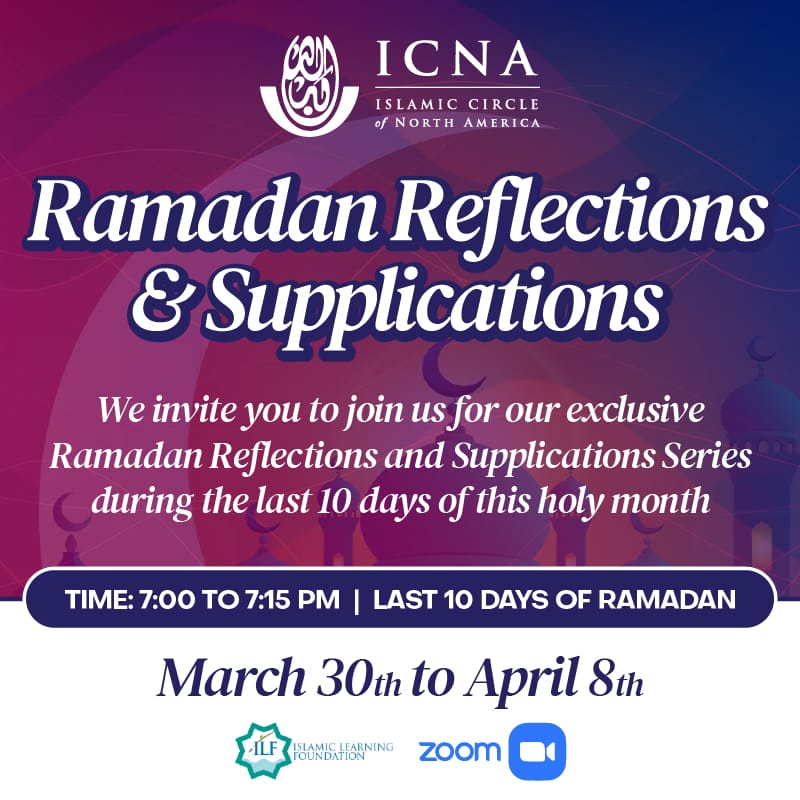
Assalamu Alaikkum, Join us for our exclusive Ramadan Reflections and Supplications series during the last 10 days of Ramadan,إنشاء الله . Delve into moments of spiritual contemplation and heartfelt supplications from the comfort of your home. Our Zoom sessions will commence promptly at 7:00 pm EST and conclude at 7:15 pm EST. Don’t miss this opportunity to enrich your Ramadan experience with us. Zoom Link: tinyurl.com/ICNASERamadan
Beyond Language Barriers: The Literary Miracle in the Chapter of Joseph
Muslims claim that the Quran is a literary masterpiece of unparalleled eloquence and structural complexity. While the full depth of its linguistic miracles may not be easily accessible to non-Arabic speakers, the Quran’s extraordinary literary miracle can be accessed by anyone, even when studied in translation. The Arabic language has long been celebrated for its rich literary tradition, with sophistication in areas like poetry, oratory, and linguistic artistry. Against this backdrop of Arabic literary excellence, the Quran stands out as a work of unmatched eloquence, style, and linguistic genius. Even those proficient in Arabic marveled at the Quran’s inimitable literary form when it was first revealed. However, the literary miracles of the Quran are not limited only to its use of the Arabic language. The Quran exhibits remarkable structural complexity, profound wisdom, overarching internal coherence, and ingenious literary techniques that transcend language barriers. These literary miracles are accessible even in translations. This allows people of different linguistic backgrounds to appreciate the argument for the divine origin of the Quran. In other words, while the intricacies of the Arabic linguistic miracle may be more challenging for non-Arabic speakers to fully grasp, the literary miracles of the Quran, such as the ring composition in the Chapter of Joseph, stand as a testament to its divine origin and literary excellence, open for all to witness and appreciate, regardless of their linguistic background. In this article, we will explore this remarkable literary miracle found in the Chapter of Joseph, shedding light on the Quran’s unmatched structural complexity and the profound wisdom encoded within its verses through this ingenious literary technique. By examining this example, we aim to provide a window into the Quran’s literary miracles, which continue to captivate and inspire people across cultures and generations. What is a Ring Composition Structure? Ring composition is a literary practice where a sequence of events or ideas is presented, and then that same sequence is repeated, but in reverse order. This creates a circular, mirrored pattern around a central point. Here is a simple example, imagine telling a short story: A: You arrived at the park B: You played on the swings C: You got an ice cream cone C: You finished your ice cream cone B: You got off the swings A: You left the park You will notice how the events now “ring” around the central point of going to the park? The story begins and ends with going to the park, with the other events mirrored around it. This circular, symmetrical structure puts emphasis on the central idea or event by surrounding it with parallel, repeated sequences. The mirroring of events reinforces the pivotal center.While the example above shows a simple three-step ring, these compositions can be extremely complex, with multiple layers of mirrored sequences weaving around a central axis within a larger narrative. This intricate patterning is considered a sophisticated literary technique. When reading the Chapter of Joseph in the Quran, it’s importantto keep in mind the remarkable context in which it was revealed.The Prophet Muhammad, peace be upon him, the recipient of the Quran, could not read or write. He was not a poet or scholar, nor was he aware of the stories in the Bible. Interestingly, the chapter of Joseph, spanning 111 verses, was revealed to Prophet Muhammad when the Jews of Medina posed him a challenge. They asked him about the story of Joseph, assuming an unlettered man could not possibly know such a detailed narrative. However, they were shocked and surprised when he recited the entire story in a single sitting. The Ring Structure in the Chapter of Joseph In the chapter of Joseph, the ring structure is a profound and intricate masterpiece that demonstrates the divine origin of the Quran. The chapter begins with an introduction in verses 1-3, providing an overview of the story. Before getting into a more detailed example, let us look at a broad example from the chapter. Then a sequence of events unfolds: A: Verses 4-6: Joseph shares his dream of the stars, sun, and moon bowing to him. B: Verses 7-18: This leads to family tension and his brothers scheme against him, and he is separated from his father. These events are then mirrored in reverse order later in the chapter: B: Verses 58-98: After many trials, Joseph is reunited with his family, and they all bow to him, fulfilling his childhood dream. A: Verses 99-101: His dream is fulfilled. The Central Axis: The Kings Dream While space constraints in this article do not allow us to show the ring structure of the entire chapter, here is an example of the ring structure around the pivotal moment when Joseph interprets the king’s dream in verses 43-49. This event serves as the turning point in the narrative, around which the events and themes are symmetrically arranged in a profound ring composition. A: Verses 19-21: Joseph is enslaved. B: Verses 24-35: He faces the assault of the minister’s wife, accused of rape, and is imprisoned. C: Verses 36-42: While in prison, he interprets the dreams of two inmates. Critical Juncture: Verse 43: King has a dream C: Verses 44-49: Later, he interprets the king’s dream. B: Verses 50-51: He is freed from prison and cleared of the accusations against him. A: Verses 54-57: He is made a treasurer by the king. The intricate symmetry extends even to smaller details. For example, the sequence of events surrounding Joseph’s separation from his family is carefully mirrored later in the chapter when the situation is reversed during the reunification. Initially, we see: A) Joseph’s brothers scheming against him in verses 7-10, as they plot to get rid of him out of jealousy. B) Then in verses 11-14, they plead with their father to allow them to take Joseph along. C) Finally, in verse 15, they abandon Joseph in a well. This sequence is strikingly mirrored later in the chapter, but in reverse order, when the family is reunited: C) Verses 69-79: The brothers unwittingly lose Benjamin, just as
Ramadan: Clarifying Our Vision, Rebooting Our System
We are in it. Ramadan. A time for increased worship, a month of food and festivities, of gatherings and decorations, and of so much more. A transformative event unlike any other, that involves each of your five senses, as well as your heart, mind, and soul. As deeply intricate and masterfully woven our deen is, no ritual or ruling in it stands alone; everything is somehow connected to another and makes sense on many levels. There are multiple reasons for performing a task, and just as many affects by fulfilling an obligation. “There are people who fast and get nothing from their fast except hunger…” (Ibn Majah ). Clearly, Ramadan is not about refraining from food and drink alone. Preparing For It With the wisdom that comes with age, we realize that as with most things in life, we get out of a thing what we bring to it, that the more prepared we are, the more productive. Like those who physically prepare by changing their diets will often fare better when dealing with hunger, those who spiritually studied the importance of the month, read about the lofty status of Ramadan, will treat this guest better than those who had not. It behooves us to study how the month and all we do in it came about, by reflecting on relevant verses. It will benefit us to study Seerah (Prophet Muhammad’s (s) life) how he and his companions dealt with the month and how their lives changed through its meaning and purpose. One cannot rationally expect it to be easy if he or she doesn’t feel the intensity and potency of this fard (obligatory) act of worship. Nor can one be motivated if he or she doesn’t realize the immense reward that comes from it. It is not just another month. Not one day in this month should be like any other day. Spring Cleaning Everything gets stale if untouched or unmoved; anything can become stagnant. We get the urge to deep clean every so often, to get rid of dust from our living spaces or start new hobbies to freshen up our mental states and lives. Spiritually, this “deep clean” is needed more than anywhere else as this is our foundation. Our Creator has gifted us the month of Ramadan exactly for that purpose. We get to reboot all our systems, physical, mental, emotional, spiritual, and everything in between. We recalibrate back to the focus on our Lord, so our spiritual vision is shifted as needed, and corrected. What we, as Muslims, aim for is to access a deeper spiritual realm, to clarify the mindset until it fastens itself to the greatest mooring of all — the guidance of Allah’s deen. Alter the Routine Make your month distinctive, your days special, your hours fresh, by coming out of your automatic daily routine during this month. If something as simple as dressing differently helps you gain greater consciousness and mindfulness, go for it; keep your newer clothes for this time. Your “different” will not be my “different,” as we each have our own normal routine of living. Just change your routine. A writer in psychology, Jane Porter, explains it well: “Breaking out of your daily routines can be a powerful way to unlock new ideas…Deviate from your routine …when it is done with intention…can be a powerful way to stimulate new thinking, breaking bad habits…” Sleep less than you’re used to, and you’ll be surprised by how far your stamina can take you and how much more can be achieved in the extra time. An extra thirty minutes you aren’t used to will feel like an hour. In that extra time, you can do a good deed. Muslim scholars and secular accomplishers alike always have advocated for taking advantage of the early hours. The Messenger of Allah (s) stated “O Allah! Bless my people in the early part of the day” (al-Tirmidhi and Abu Dawud). Just as the addition of good habits is crucial during Ramadan, so too is the removal of bad habits. Reflect on what you need removed from your life that is displeasing to Allah SWT and try to commit one less of those deeds per day. Find ways to increase your armor to fight the desire to commit that act. Sometimes it is as simple as spending less time with company that encourages those bad deeds. Even if unable to completely stop at the time, simply reflecting on the sin will still have a great positive effect. Our sins will become magnified in our own eyes, our sensitivities heightened to our wrongs so they will seem like the mountains they are. If nothing else, they should become harder to do. Breaking bad habits begins with breaking routines. Adding Intentional Study to the New Routine It is important to hone the time we spend studying. Don’t shy away from listening to a lecture you already heard, reading a book that didn’t interest you before, or conversing on spiritual topics with learned folks. Every sentence hits differently each time you hear it, because your mind is in a different state — you have added experiences to your repertoire of devotional living, and new ideas sprout as you reflect on the meaning of your existence and the purpose of your life. Because we are constantly changing, our absorption of knowledge continues to vary and so the influx of lessons from our deen must be constant. This reorganizing will fall into a newly realigned mentality more in tune with our Rabb, to get us through another year of greater obedience and a more in-depth and proactive practice of the deen. Every Journey Starts with a Small Initial Move If your sights are set on lofty statuses and great accomplishments that some are blessed and talented enough to attain, you may become overwhelmed and, therefore, underachieve. The beauty in our deen is its simplicity in starting anything by making a clear and precise intention; and wisdom in its design — the Prophet
2nd International Day to Combat Islamophobia
ICNA joins the rest of the world in observing The Second International Day to Combat Islamophobia. As we observe this special day, we reflect on the challenges faced by Muslims here in the USA and around the world. This day serves as a reminder of the urgent need to combat Islamophobia and promote understanding, tolerance, and respect for religious diversity. Islamophobia manifests itself in various forms, including hate speech, stereotyping, discrimination in employment and education, physical violence, and even state-sponsored policies targeting Muslims. Much of these challenges are fueled by many in the mainstream media and those in authority who use their platforms and voices to present Islam and Muslims in a bigoted, prejudiced and negative way. Politicians particularly often use Islamophobic rhetoric as a smoke-screen when they lack moral responsibility to face their poor performances. Such bigotry not only undermines the rights and dignity of individuals but also perpetuates division and hostility within societies much against the principles of democracy and living a pluralistic society; a pluralistic world. On this International Day of Islamophobia, ICNA calls on individuals, communities, governments, and organizations to unite in combating this menace. Let us know that bigotry, hatred for others have to place in our society, our country and our world.
Celebrating Women’s History Month
Celebrating Women’s History Month Each March, the global community comes together to celebrate Women’s History Month, a dedicated time to acknowledge the achievements, contributions, and struggles of women throughout history. Central to this celebration is the recognition of women’s accomplishments across various fields and endeavors. From pioneering breakthroughs in science and technology to reshaping political landscapes and enriching the arts, women have left a permanent mark on societies, propelling human knowledge and progress forward. Women’s History Month serves as a beacon, shining a light on the remarkable contributions of women across generations while reminding us of the ongoing quest for gender equality and empowerment. The roots of Women’s History Month can be traced back to the United States, where it originated as a local celebration in Sonoma, California, in 1978. Over time, it gained momentum and by 1987, Congress declared March as the official Women’s History Month in the United States. Since then, nations around the world have united in honoring women’s history and progress. Women’s History Month serves as a poignant reminder of the ongoing struggle for gender equality and the imperative to address systemic barriers and injustices. Despite considerable progress, women still confront inequities in various spheres, including the workplace, politics, education, and healthcare. It underscores the enduring fight for equal rights, representation, and opportunities, particularly for women from marginalized communities. Throughout history, Muslim women have excelled in diverse fields, breaking barriers and challenging stereotypes along the way. In scholarship, achievers like Fatima al-Fihri, who founded the University of Al Quaraouiyine in 859 CE, paved the way for generations of women to pursue education and intellectual inquiry. In the sciences, figures like Maryam al-Ijliya, a 10th-century mathematician, and physicist, made significant contributions to fields such as algebra and astronomy, laying the groundwork for future advancements. In the arts and literature, Muslim women have produced timeless works of poetry, literature, and visual arts that continue to inspire audiences globally. From the mystical poetry of Rabi’a al-Adawiyya to the lyrical prose of Leila Aboulela, Muslim women have utilized their creative talents to explore themes of identity, spirituality, and social justice. Moreover, Muslim women have been at the forefront of social and political movements, advocating for human rights, gender equality, and social justice. From Malala Yousafzai’s unwavering commitment to girls’ education to Tawakkol Karman’s pioneering activism for peace and democracy in Yemen, Muslim women have displayed courage and resilience in the face of adversity. Despite encountering unique challenges in their pursuit of equality and empowerment, including discriminatory laws, cultural norms, and gender-based violence, Muslim women continue to navigate complex intersections of identity and oppression with tenacity. Let us draw inspiration from the pioneers who have paved the way for progress and empower the next generation of women leaders, innovators, and change-makers. Together, we can build a future where gender equality is not only a goal but a reality, where women’s contributions are celebrated and valued, and where every individual has the opportunity to live with dignity, respect, and equality. Let’s uplift their voices, amplify their stories, and recognize their invaluable contributions to our communities and our world. As we celebrate Women’s History Month, let us honor the past, embrace the present, and envision a future where the achievements and aspirations of women are celebrated every day of the year.